
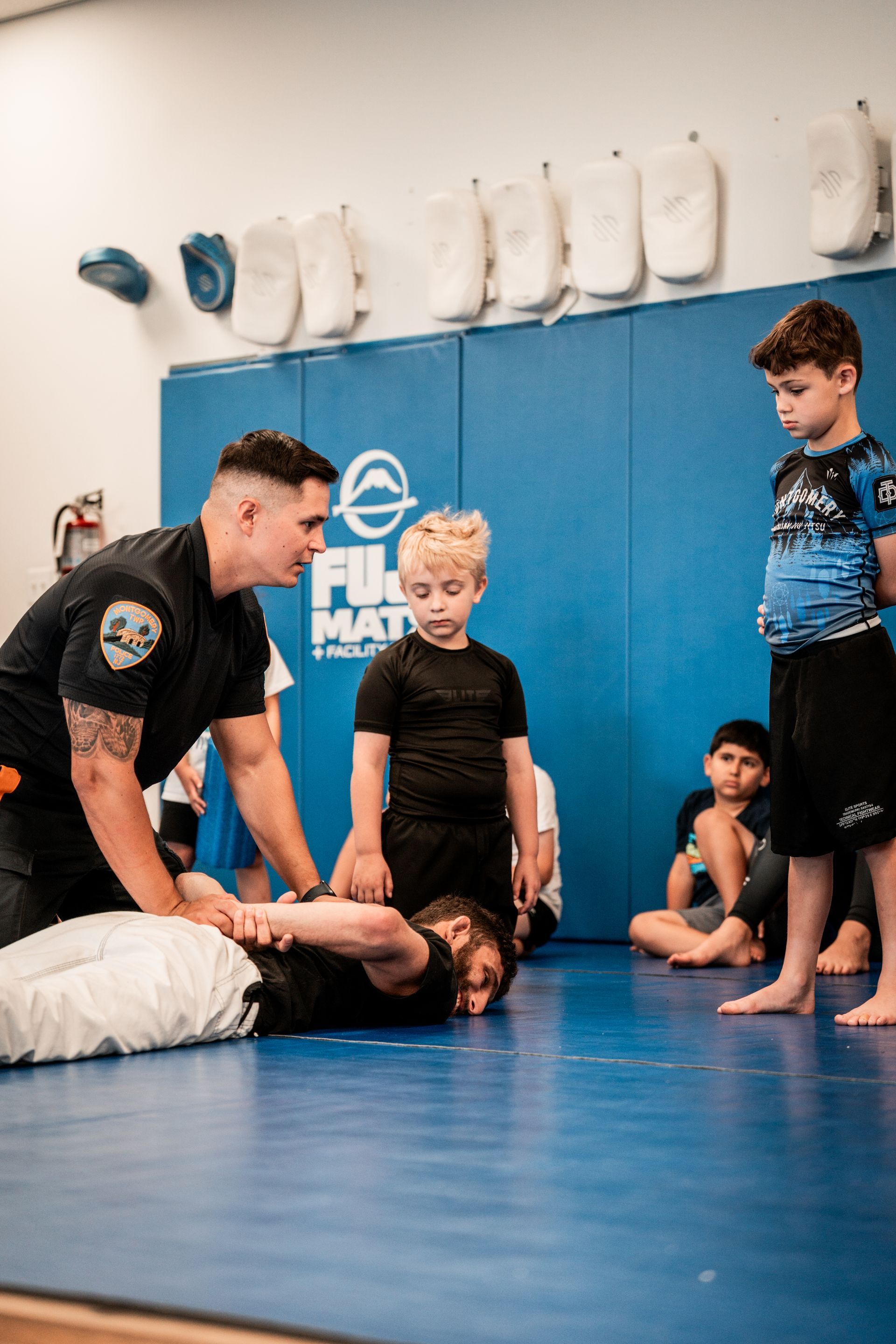
Jiu-jitsu gives teens a calm, practical way to feel capable under pressure, then carry that confidence into school, friendships, and work.
Teen years come with real pressure: social dynamics, academic expectations, tryouts, part-time jobs, and the constant background noise of phones and group chats. When stress spikes, many teens either shut down or overreact, and neither response feels good. In our experience, Jiu-jitsu offers something rare: a structured place to practice staying calm while solving problems in real time.
What makes Jiu-jitsu especially effective for teens is that progress is measurable. You learn a skill, you test it with a partner in a controlled way, and you see the result. That steady feedback loop builds confidence the honest way, through competence, not hype.
Here in Montgomery, NJ, we work with teens who are outgoing, shy, anxious, athletic, not athletic, and everything in between. Our goal stays the same: help you build quiet confidence, strong habits, and leadership that shows up when it counts.
Why Jiu-jitsu hits differently for teen confidence
Confidence is often treated like a personality trait, but we see it more like a trained skill. When you repeatedly face manageable challenges and learn you can handle them, you start to carry yourself differently. Your posture changes, your voice steadies, and your choices get clearer.
In Jiu-jitsu, challenges are built into the training by design. You learn to escape bad positions, keep breathing when you feel pressure, and make one smart decision at a time. For teens, that is a powerful lesson: you do not need to panic to take action.
Another key piece is that technique matters more than size. Teens develop a sense of control without needing to be the biggest or loudest person in the room. That is a confidence boost that tends to stick, because it is earned.
The “quiet confidence” that helps with bullying and social pressure
Bullying prevention is not just about learning how to fight. It is about learning how to carry yourself, set boundaries, and respond with composure. When teens feel physically capable, many day-to-day interactions stop feeling scary, and that changes the whole social equation.
We train confidence in a way that is non-aggressive. That matters. In our classes, the goal is never to “win” at someone else’s expense. The goal is to improve, protect yourself, and respect your partner. Over time, teens learn that strength and self-control belong together.
This is also where “quiet confidence” shows up. You do not need to brag about training for it to make a difference. The shift is subtle: you look people in the eye, you speak clearly, you stop shrinking yourself. And yes, that kind of presence can deter bullies before anything physical ever happens.
Leadership training without cheesy speeches
Leadership is often taught as a talk, but teens learn it best as a role. On the mats, leadership starts small: being a good partner, listening, showing up on time, and helping a newer student remember a step without making it awkward.
As skills grow, we give teens more responsibility in age-appropriate ways. Sometimes that looks like leading warm-ups, demonstrating a drill, or setting the tone during partner rounds. Those moments matter because they teach leadership as behavior, not a label.
We also notice something interesting: shy teens often become the most reliable leaders. Not because personality changes overnight, but because consistency builds trust. When you train regularly, improve steadily, and stay respectful, people naturally look to you.
What teens actually learn in class (and why it translates to life)
Jiu-jitsu looks like grappling from the outside, but the real curriculum is deeper than moves. Teens practice problem-solving, emotional regulation, and communication every time they train with a partner.
Here are a few skills that tend to transfer quickly to school and everyday life:
• Staying composed under pressure by focusing on breathing, posture, and one next step at a time
• Setting boundaries with confidence, including when to say no and when to disengage
• Handling failure productively, because tapping out is normal and learning comes from it
• Communicating clearly with partners, especially around safety, pace, and intensity
• Building focus through repetition, where small details add up to big progress
When these habits become normal in training, teens start using them elsewhere without forcing it. A hard test feels like a challenge, not a threat. A tough conversation feels doable. And setbacks stop feeling permanent.
The structure teens need, with the safety parents expect
Parents often ask if Jiu-jitsu is safe for beginners, especially for teens who feel nervous or who have never played a contact sport. Our answer is straightforward: safety comes from structure, supervision, and a progressive approach.
We teach technique in layers, so teens are not thrown into situations they cannot handle. We also emphasize tapping early, respecting partners, and treating training as skill development, not a brawl. That culture is not accidental, and it is something we reinforce every class.
A practical detail that matters: the room is supervised, and classes have a plan. Teens do better when expectations are clear. When training is organized and consistent, confidence grows faster because students can relax enough to learn.
A realistic timeline: when you start seeing confidence and leadership
Every teen is different, but we can share a general pattern we see again and again. Confidence does not arrive all at once. It tends to show up in phases, and that is actually encouraging because you can feel the momentum.
A simple way to think about progress looks like this:
1. Weeks 1 to 4: You learn basics, start moving better, and feel less nervous about new situations
2. Months 2 to 3: You recognize positions, escape more often, and begin trusting your own decisions
3. Months 4 to 6: You handle pressure with calmer breathing, improve conditioning, and speak up more naturally
4. Months 6 plus: You develop a steady training identity and begin leading by example with newer teammates
We also see teens become more coachable in other parts of life. That is not because Jiu-jitsu makes you obedient. It is because you learn how to receive feedback, apply it, and keep going.
Why consistency matters more than “natural talent”
Some teens walk in coordinated and fearless. Many do not. The good news is that Jiu-jitsu rewards consistency far more than raw athletic talent. If you show up, pay attention, and train with intention, you get better. That is the deal.
This is one reason Jiu-jitsu can feel like a “third space” for teens, a place that is not school and not home, where expectations are simple and effort matters. After the past few years of disrupted routines and screen-heavy downtime, a lot of teens genuinely benefit from being back in their bodies. You can almost see the relief when movement becomes purposeful again.
Consistency also builds leadership. Teens who keep showing up become dependable, and dependability is a core leadership trait, even if nobody calls it that out loud.
How our teen training supports adult goals too
Families often ask how teen training connects to adult training, especially as teens get older and start thinking about fitness, self-defense, and stress management in a more mature way. The skills bridge naturally.
As teens develop, many want more challenge, more technical depth, and more conditioning. Our training approach supports that transition so teens can continue improving without feeling out of place. And for parents who are curious themselves, it is common to see interest in Adult Jiu-Jitsu in Montgomery, NJ once you understand how practical the training is.
That shared journey can be meaningful. When a teen trains and a parent trains too, you speak the same language about discipline, goal-setting, and resilience. Even if you never train together, you feel the ripple effect at home.
What to look for when choosing a teen program in Montgomery
If you are a parent, you are not just signing your teen up for an activity. You are choosing an environment. If you are a teen reading this, you are choosing a place where you will spend time, make mistakes, and grow.
Here is what we believe matters most for teens starting Jiu-jitsu in Montgomery, NJ:
• Clear coaching and organized classes that reduce anxiety for beginners
• A culture of respect where partners help each other improve
• Safety standards that make it normal to tap, reset, and learn
• Skill progression that keeps training challenging without being overwhelming
• Opportunities for leadership that appear naturally as you gain experience
That combination is where confidence becomes real, because it is built in a room that supports it.
Take the Next Step
If you want a teen program that builds real confidence, not performative toughness, we have designed our training to do exactly that. At Montgomery Brazilian Jiu-Jitsu, we focus on structure, safety, and steady progress so your teen can learn Jiu-jitsu in a way that feels challenging but manageable.
Whether your goal is bullying prevention, better emotional control, stronger fitness habits, or leadership that shows up at school and at home, we are ready to help you start with a clear plan and a supportive team at Montgomery Brazilian Jiu-Jitsu.
Step onto the mats with confidence and start learning Brazilian Jiu-Jitsu at Montgomery BJJ.