
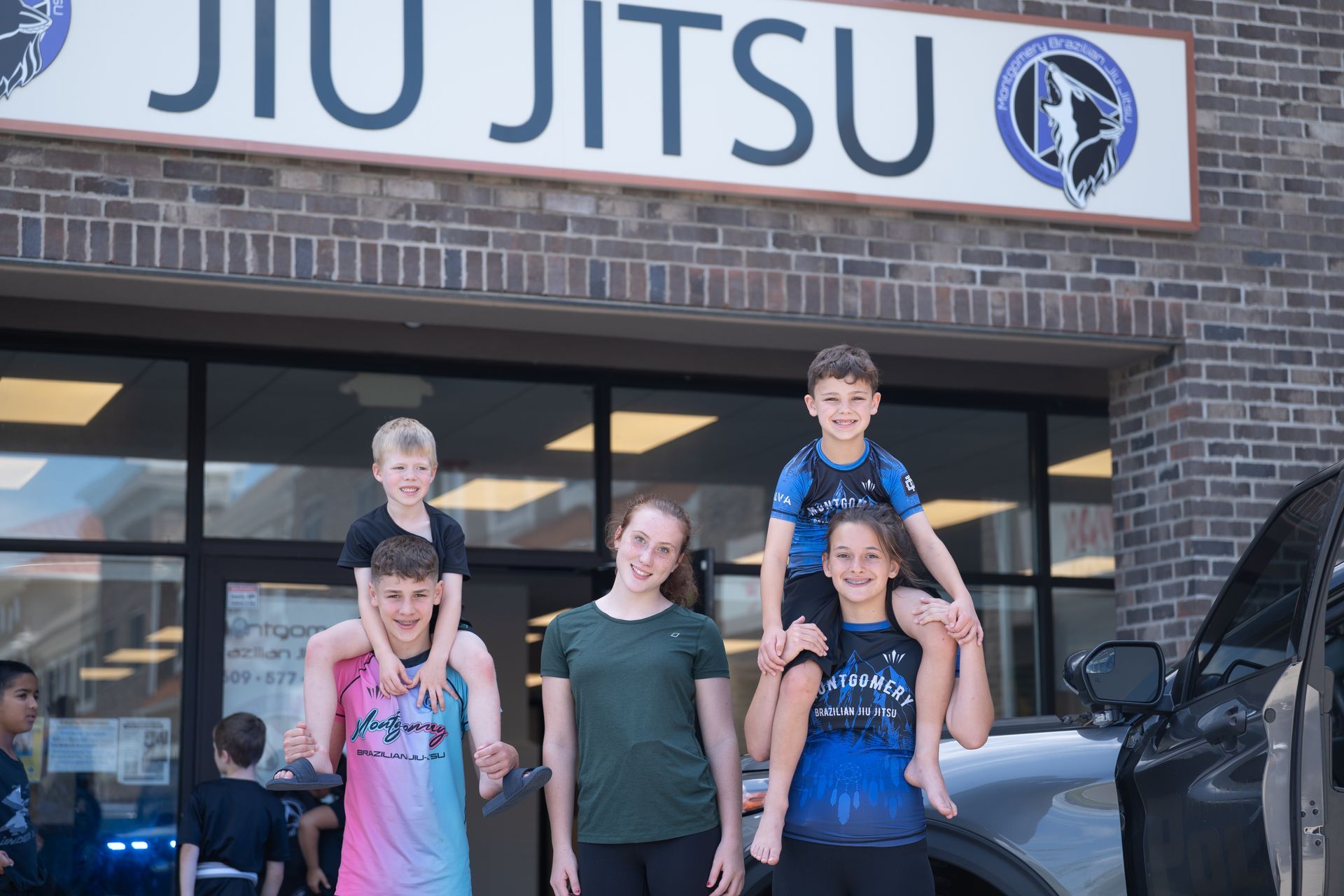
Jiu-jitsu gives kids a rare mix of confidence, real self-defense, and safety-first athleticism that fits family life in New Jersey.
If you’re a parent in Montgomery, NJ, you’ve probably noticed the same thing we have: families want activities that do more than “burn energy.” You want something that builds coordination, focus, and confidence without turning every practice into a high-pressure competition. That’s exactly why Jiu-jitsu has surged in popularity nationwide, and why it has become such a practical choice for kids here in our community.
Jiu-jitsu works because it’s based on leverage, positioning, and problem-solving, not just strength or speed. For many kids, that’s a relief. For many parents, it’s also the point: a skill set that can translate into calmer choices, safer bodies, and better boundaries in real life, not just a trophy shelf.
In this parent’s guide, we’ll break down what kids actually do in class, how we keep training safe, what age tends to work best, and how families in Montgomery, NJ can make training part of a healthy routine that sticks.
Why Jiu-jitsu is booming and why that matters for NJ families
Jiu-jitsu is not a niche activity anymore. Global participation is estimated around 6 million, with roughly 750,000 in the US, and search interest has risen dramatically over the last two decades. That growth matters for parents because it has pushed instruction quality, curriculum structure, and youth programming forward. In plain terms: kids’ classes have evolved into thoughtful, age-appropriate programs, not just “mini adult class.”
Montgomery is a family-oriented part of Somerset County, and our day-to-day reality tends to include school activities, homework, sports seasons, and tight schedules. A martial art has to fit into that rhythm. Jiu-jitsu tends to work well because progress is measurable in small steps, and the training can be scaled up or down depending on your child’s maturity and comfort.
New Jersey also has a strong youth sports culture. That’s a good thing, but it can come with overuse injuries and pressure to specialize early. One underrated benefit of Jiu-jitsu is that it builds broad athletic literacy: balance, base, grip strength, coordination, controlled breathing, and spatial awareness. Those are “transfer skills” that support nearly every sport your child might play.
Is Jiu-jitsu safe for kids? A clear, honest look at risk
Parents deserve a straight answer. Any contact sport has injury risk, and Jiu-jitsu is no exception. A 2019 study found 59.2% of athletes reported at least one injury in the prior six months, and that number can sound alarming until you add the context that experience and smart training habits reduce risk significantly. Our job is to build those habits early.
Here’s what safety looks like in a well-run kids program: controlled intensity, strong supervision, and a curriculum that prioritizes movement quality and awareness before harder sparring. Kids do not need to “go hard” to get better. In fact, most progress comes from repeating fundamentals with calm attention.
We also take seriously the difference between what you might see online and what kids actually do in class. High-level competition footage often features submissions and fast scrambles. In pro events, a meaningful percentage of matches end in finishes, with chokes being the most common. That can look intense. But kids training is fundamentally different: the emphasis is on learning positions, escapes, and control while keeping partners safe.
What kids actually learn first (and why it builds confidence fast)
Confidence in Jiu-jitsu doesn’t come from hype. It comes from competence. Early skill development is about learning how to move your body, how to keep your balance when someone bumps you, and how to stay calm when you’re uncomfortable.
The first building blocks we teach
We start with concepts your child can feel immediately:
- Base and posture, so your child learns how not to topple over when pushed or pulled
- Framing and distance, which helps create space and reduce panic
- Escapes from common “stuck” positions, so your child learns problem-solving under pressure
- Controlled grappling games that make learning fun while building real patterns
- Respectful partner habits, including tapping, stopping, and listening
When kids can escape, reset, and try again, their whole posture changes. You’ll often notice it outside the gym first: steadier eye contact, fewer emotional spikes, and a little more patience when something is hard.
The anti-bullying question: what Jiu-jitsu really does and does not do
A lot of parents come in asking for “anti-bullying.” We understand why. But we also like to define it clearly so your expectations are realistic and helpful.
Jiu-jitsu is not about turning kids into fighters. Our goal is to help your child carry themselves with calm confidence, set boundaries, and have practical tools if a situation becomes physical. The biggest wins often happen before any physical contact: better awareness, better posture, and a kid who looks less like an easy target.
Just as important, we build social skills that reduce conflict:
- Practicing assertive voice and clear “no” communication
- Learning how to de-escalate and get an adult involved
- Recognizing when to leave instead of “prove something”
- Handling frustration without melting down or lashing out
If you’re looking for Jiu-jitsu in Montgomery, NJ that supports both self-defense and character development, the key is an approach that treats safety, empathy, and responsibility as part of the curriculum, not an afterthought.
What age should kids start?
Many kids can start around ages 4-6, especially when the program uses games-based learning and short, focused instruction. At that age, we’re often building fundamentals that look simple but matter a lot: tumbling, balance, coordination, following directions, and learning how to be a good training partner.
As kids get older, we can layer in more technical detail, more positional strategy, and eventually more live training in carefully managed rounds. The pace depends on your child. Some kids love challenge right away. Some need a few weeks to settle in, get comfortable with new coaches, and learn the “rules of the room.”
If your child is a little hesitant, that’s normal. The first class can feel like a new language. We keep the environment welcoming and structured so kids know exactly what to do next.
How we keep training structured and calm (even when kids have big energy)
Kids bring energy. Sometimes a lot of it. The trick is not to “shut it down,” but to give it a safe container.
We use routines that kids learn quickly: how to line up, how to partner, how to move on the mats safely, and how to pause and listen. Over time, those routines become self-control skills. Parents often tell us this is the part they didn’t expect: the carryover into school, homework, and sibling dynamics.
A typical kids class flow
A well-structured class usually includes:
1. Warm-ups that build athletic movement (not punishment laps)
2. Technique of the day, taught in small pieces
3. Partner drilling with coaching and corrections
4. A supervised game or positional round that applies the skill
5. A quick wrap-up that reinforces respect and safety habits
That mix keeps the class moving while still giving your child enough repetition to actually learn.
Fitness benefits without the “sports burnout” feeling
Many kids sports come with constant performance pressure. Jiu-jitsu can be different. Yes, kids improve and earn rank over time, but the day-to-day focus is personal progress: better balance, smoother movement, cleaner technique, calmer reactions.
Physically, Jiu-jitsu builds:
- Functional strength through crawling, bridging, and controlled lifting
- Grip and forearm endurance from holding positions and learning grips
- Mobility and coordination from rolling, shrinking into tight spaces, and moving around a partner
- Cardiovascular fitness that comes in waves, similar to real play
- Body awareness that supports safer falls and safer contact in other sports
A nice side effect is that kids often sleep better on training days. It’s not magic, it’s just the combination of movement plus focus, which tends to settle the nervous system.
About sparring for kids: when it helps and when it does not
Live training is valuable, but only when it’s earned through readiness and managed well. The goal is not to “win” in class. The goal is to learn timing, composure, and control.
We introduce sparring in stages. Early on, that might mean positional games where kids start from a specific situation and practice one escape or one control. That keeps the intensity lower and the learning higher. As kids progress, rounds can become more open, but always with clear rules, close supervision, and an emphasis on keeping partners safe.
We also teach kids to tap early and tap often. Tapping is not quitting. It’s communication. It’s how kids learn to train for years without getting hurt.
Gear, costs, and what you actually need to start
Parents often assume they need to buy a lot on day one. You usually don’t. The main “gear decision” is whether your child will train in a gi, no-gi, or both, depending on the program track. Many families like the structure of the gi because it slows things down and makes grips and control more obvious. That can be helpful for safety and learning.
If you’re budgeting, it’s fair to know that gear costs can add up over time, especially as kids grow. We try to keep the path simple at the start, and we’ll tell you what matters now versus what can wait.
What matters most is consistency. Two classes a week for a year typically beats a short burst of five classes a week followed by months off. Skill-building likes steady effort.
A note for parents: your child’s mindset matters more than “talent”
We’ve watched kids come in shy, stiff, and unsure, and a few months later move with confidence. We’ve also watched athletic kids struggle at first because Jiu-jitsu asks for patience and problem-solving, not just speed. Both outcomes are normal.
The kids who thrive are usually the kids who learn two habits:
- Show up even when you’re not “feeling it”
- Stay coachable when something is confusing or uncomfortable
If you support those habits at home, the mats reinforce them in a powerful way.
Adult training matters, too (because kids notice what you do)
Many parents ask us about adult Jiu-jitsu in Montgomery, NJ, and the reason is simple: when kids see you practice hard things, stay humble, and keep learning, it changes the atmosphere at home. You don’t need to become a competitor. You just need a place to train safely, get in shape, and build real skill.
Adult classes also help with the practical side of parenting: stress management, better sleep, and the feeling that you’re doing something for yourself that’s genuinely productive. And when your family trains in the same community, routines get easier. The drive feels worth it.
Take the Next Step
If you want a youth program that balances confidence, real-world self-defense, and a safety-first culture, we built our approach around exactly that. At Montgomery Brazilian Jiu-Jitsu, we teach Jiu-jitsu in a way that helps kids grow into strong movers and steady thinkers, while giving parents clear structure, coaching, and communication along the way.
You do not need your child to be “tough” to start. You just need a consistent schedule and a place where fundamentals, respect, and smart training come first, and that’s what we focus on every day at Montgomery Brazilian Jiu-Jitsu.
Put these techniques into practice by joining a Jiu-Jitsu class at Montgomery Brazilian Jiu-Jitsu.