
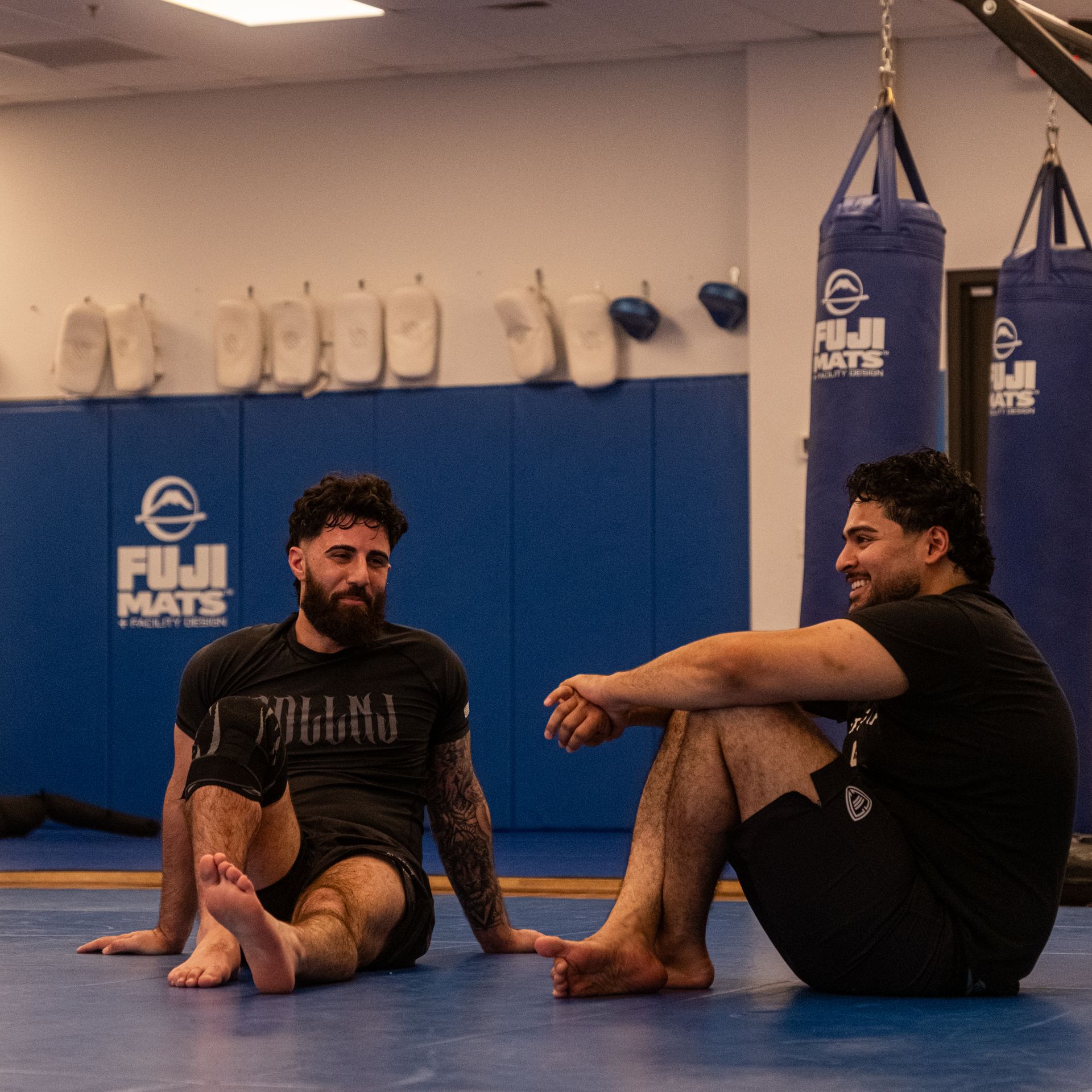
The easiest way to stay motivated is to train somewhere that makes progress feel inevitable, not intimidating.
Motivation is a funny thing. Most adults don’t struggle with knowing what they should do for fitness, stress relief, or confidence, but sticking with it is the hard part. That’s where Jiu-jitsu stands out, especially when your training is structured, coached, and surrounded by people who want you to get better.
In our Jiu-jitsu classes, we see a consistent pattern: when you can measure progress in real skills, you stop relying on hype. You start relying on momentum. If you’re exploring Jiu-Jitsu in Montgomery, NJ because you want a routine that actually holds your attention, our goal is to show you how lasting motivation is built class by class.
We also know the real barriers adults deal with: busy schedules, first class nerves, and the worry that everyone else already knows what they’re doing. Our job is to make the room feel calm and professional, so you can focus on learning instead of feeling watched or overwhelmed.
Why Jiu-jitsu Motivates Adults Differently Than Typical Workouts
A treadmill can be useful, but it rarely feels meaningful. With Jiu-jitsu, you’re practicing a skill that has layers: timing, leverage, balance, breathing, decision-making, and staying composed under pressure. That mix creates a kind of motivation that’s less about willpower and more about curiosity.
When you train regularly, you don’t just get tired, you get feedback. Some days the feedback is obvious: you escape a position that used to trap you. Other days it’s quieter: you stayed relaxed longer, you remembered a grip, you kept your posture. Those little wins matter because adults need proof that effort is doing something.
There’s also variety built into every class. Even when we teach the same theme, the experience changes because your partners are different, your reactions are different, and your understanding grows. That constant change is one of the biggest reasons people stick with Jiu-jitsu over the long term.
The Three Motivation Engines We Build Into Every Class
Lasting motivation is not a personality trait. It is usually the result of an environment that supports consistency. In our adult program, we focus on three practical drivers that keep you coming back even when life gets busy.
1. Structure You Can Trust
Adults tend to quit fitness routines when they feel random. If you don’t know what you’re doing or why you’re doing it, it’s easy to drift. Our classes are designed to feel organized: clear instruction, a skill focus, and time to practice in a controlled way.
That structure makes motivation easier because you can show up without negotiating with yourself. You don’t need to invent a workout. You just follow the class format, and the work gets done.
2. Progress You Can See
In Jiu-jitsu, progress shows up in specific moments: defending a sweep, holding top position longer, escaping side control, finishing a simple submission cleanly. Those are tangible markers, and they keep the training from feeling like you’re stuck.
We also help you focus on small targets rather than vague goals. “Get in shape” can feel slippery. “Improve my guard retention” is something you can actually train.
3. Community and Accountability That Feels Natural
Most adults don’t want forced motivation. You don’t want someone yelling at you. You want a place where people notice if you’re missing and are happy when you’re back. A calm room with supportive partners creates accountability without pressure.
That’s one reason a professional, low-ego culture matters. When the room feels safe and welcoming, you’re more likely to keep training through the awkward early phase where everything is new.
What Adult Beginners Usually Feel in the First Few Weeks
If you’re looking at Adult Jiu-Jitsu in Montgomery, NJ and you’re nervous, that’s normal. Most people are. You might be thinking you need to “get in shape first,” or you might worry about being the only beginner. In reality, beginners show up all the time, and our job is to make sure your first classes feel manageable.
In the first few weeks, you’ll learn how to move on the ground safely, how to tap early, and how to practice with control. You’ll start recognizing basic positions, even if you can’t name them yet. And you’ll probably have a moment where you realize the art is less about strength and more about leverage, which is honestly a relief for a lot of adults.
Motivation tends to spike early because everything is new. Then it dips a bit when you realize how much there is to learn. That dip isn’t a sign you’re failing. It’s a sign you’re becoming aware, and awareness is the first step toward real skill.
Motivation Comes From Routine, Not Mood
We like to be honest about this: if you wait until you feel motivated, your training will be inconsistent. The adults who make the biggest changes usually treat training like a scheduled commitment, not a decision they remake every day.
That doesn’t mean you need to train nonstop. It means you pick days that fit your life and you protect them. When Jiu-jitsu becomes part of your weekly rhythm, motivation becomes less necessary. Your routine carries you.
A simple example: if you decide you train Monday and Thursday, those days become “training days.” You don’t need to debate it. You just show up, do the work, and leave a little better than you arrived.
Why Adults Quit Jiu-jitsu and How We Help You Avoid It
Most people don’t quit because they hate Jiu-jitsu. They quit because they hit friction. If we remove the common friction points, you’re far more likely to stay consistent and keep enjoying the process.
Plateaus That Feel Like Nothing Is Changing
Plateaus are part of skill learning. The problem is that plateaus can feel personal, like you’re stuck while everyone else improves. Our approach is to give you short-term targets and enough variation that your training stays interesting.
Sometimes the solution is as simple as changing the training focus for a few weeks. Sometimes it’s getting specific coaching feedback so you know what to work on instead of just “trying harder.”
Going Too Hard Too Soon
Adults often show up with a burst of energy and then train like every round is a final exam. That can lead to soreness, burnout, or nagging injuries. We coach you to train with control, build conditioning gradually, and learn how to pace yourself so you can return consistently.
Feeling Out of Place
If the room feels intense or ego-driven, beginners disappear. We work hard to maintain a calm, professional environment where you can learn without feeling like you have to prove something.
A Practical 6 to 8 Week Plan for Lasting Motivation
If your goal is to make Jiu-jitsu a real habit, the first two months matter. You’re building identity and routine, not chasing perfection. Here’s a straightforward approach that works for many adults training in Jiu-Jitsu in Montgomery, NJ:
1. Pick two to three class days each week and treat them like appointments you keep
2. Choose one technical theme to focus on for the month, like escapes or guard passing
3. Ask our coaches one clear question per week so you keep getting directional feedback
4. Train with a variety of partners so you learn different body types and styles safely
5. Track small wins in a note on your phone, because progress is easier to feel when you record it
6. Give yourself permission to have messy classes, because learning is supposed to look like learning
This plan sounds simple, and it is, but it’s also surprisingly powerful. The goal is to reduce decision fatigue and make showing up the default.
How Our Class Experience Keeps Training Engaging
We design our classes to keep your brain involved, not just your muscles. Jiu-jitsu is problem-solving under pressure, so the class needs enough repetition to build skill and enough variation to keep you curious.
You can expect a balance of technical instruction, drilling, and controlled live training. That live training is where motivation often locks in because you get real-time evidence that technique works. And when you have a supportive partner, it feels like learning together instead of competing to “win.”
We also pay attention to pacing. Adults have jobs, families, and stress. Training should challenge you, but it should also leave you feeling better equipped for the rest of your day, not wrecked for it.
Confidence That Actually Transfers Outside the Gym
Fitness motivation is great, but many adults stick with Jiu-jitsu because of what it does mentally. You learn how to stay calm in uncomfortable positions, how to problem-solve when you’re tired, and how to keep working without panicking.
That calm carries over. We regularly see students become more confident in everyday situations, not because they’re looking for conflict, but because they feel more capable in their own body. That matters if you want a sense of steadiness, especially during stressful seasons of life.
And because Jiu-jitsu requires focus, it can be a rare break from constant notifications and mental noise. For an hour, you have one job: learn, move, breathe, and improve.
Local FAQ for Adults Considering Jiu-jitsu in Montgomery, NJ
Do I need to be in shape to start?
No. Training helps you get in shape, and we scale intensity appropriately as you learn.
What if I feel intimidated or awkward?
That’s common. We keep the room professional and beginner-friendly, and you’ll get guidance on etiquette, pacing, and safety from day one.
Will I be forced to spar right away?
We introduce live training progressively. You’ll learn basics first, and we emphasize controlled rounds where safety and learning come first.
How often should I train as a busy adult?
Two to three times per week is a realistic sweet spot for many people. Consistency matters more than cramming sessions.
What should I bring to my first class?
Comfortable athletic clothing, water, and a willingness to learn. If you have questions before you arrive, the website has helpful details and our team can guide you.
Take the Next Step
Building lasting motivation usually comes down to a simple formula: a structured plan, visible progress, and a room that feels supportive enough to return to even on low-energy days. That’s exactly what we aim to deliver, especially for adults who want a calmer, more professional way to learn a challenging martial art.
If you’re ready to experience that approach in person, Montgomery Brazilian Jiu-Jitsu gives you a clear path from beginner fundamentals to confident, consistent training, without intimidation or ego taking over the experience.
Experience how consistent training can transform your fitness and confidence at Montgomery Brazilian Jiu-Jitsu.