
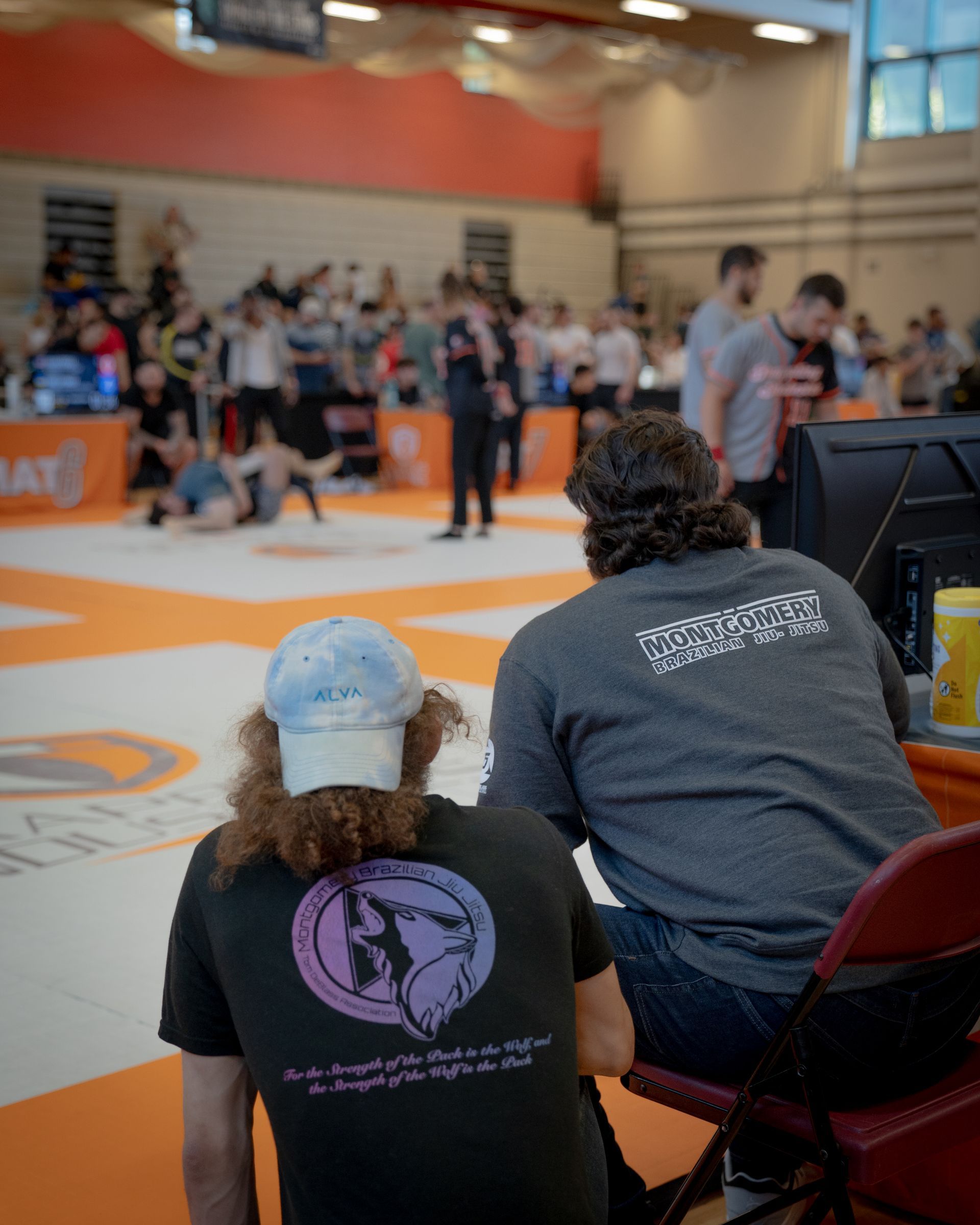
Jiu-jitsu gives your brain a clear job in the moment, and that simple switch can feel like a full reset.
If you live in Montgomery, NJ, you probably know the specific kind of stress that sneaks in quietly: long workdays, family logistics, packed commutes, and the constant feeling that your mind is still “on” even when you’re home. One reason we love teaching Jiu-jitsu is that it interrupts that pattern in a way that’s hard to replicate with screens, passive workouts, or yet another productivity hack.
Jiu-jitsu is physical, yes, but the mental effect is what surprises most new students. The training demands present-moment awareness, decision-making under pressure, and calm breathing when your instincts want to rush. Over time, that combination fosters sharper focus and real stress relief that follows you off the mat.
In our adult program, we see it again and again: people arrive wound up from work or distracted by a thousand open tabs in their head, and they leave class more grounded. Not “perfect,” not magically immune to stress, just noticeably steadier and clearer.
Why focus is hard in Montgomery, and why training changes it
Montgomery is a busy place in a quiet-looking wrapper. Many of us are balancing professional responsibility with family schedules, school events, and commuting into high-pressure work environments. That creates a predictable mental loop: you start the day thinking ahead, you spend the day reacting, and you end the day still replaying the same problems.
What makes training different is that it forces a clean boundary. When you’re drilling a technique or sparring, you can’t half-pay-attention and still do it well. Your brain has one job: solve the immediate problem in front of you. That’s a big deal for focus, because it pulls you away from rumination and back into the present.
Research from the past few years increasingly describes Brazilian Jiu-jitsu as “meditation in motion,” and that’s a fair description. We’re not sitting quietly, but the attentional demand is similar: you notice what’s happening now, you regulate your breathing, and you respond instead of spiraling.
Jiu-jitsu as “meditation in motion” (without having to sit still)
A lot of adults want the benefits of mindfulness but struggle with traditional meditation. Sitting still can feel like one more task to “get right,” and honestly, if your mind is already racing, closing your eyes can make it louder.
Jiu-jitsu gives you a different doorway into the same skill set. The mat provides immediate feedback, and your attention is anchored by movement, contact, timing, and posture. You learn to spot small details, like where your weight is, how your hips move, or how your breathing changes when pressure increases.
That’s not just philosophical. It’s practical: the more you train, the faster you recognize patterns, and the less your mind wanders. Those repetitions train concentration the same way reps train muscle.
What focused training looks like in a typical class
Our classes are structured so you’re not guessing what to do next. We guide you through a warm-up, technical instruction, drilling, and controlled sparring. The mental benefit comes from the way those pieces stack.
Here’s what your attention is doing during a normal session:
- Tracking a specific goal, like maintaining posture in guard or controlling distance from top
- Problem-solving in real time when your partner counters your first option
- Practicing calm breathing under pressure, especially in tight positions
- Noticing micro-adjustments that make a technique work with less effort
- Resetting quickly after mistakes, because the next repetition starts right away
That last point matters more than people expect. Learning to reset instead of spiraling is a focus skill, and it carries into work, parenting, and everything else you do in Montgomery.
How Jiu-jitsu reduces stress at the body level
Stress relief is not only a mindset thing. It’s physical chemistry, too. Challenging training supports endorphin release, helps regulate sleep, and gives your nervous system a clear “on” and “off” cycle. If your days are mostly cognitive stress with limited physical outlet, your body can stay stuck in alert mode.
Jiu-jitsu changes that because it’s demanding but controlled. You’re working hard, but you’re also learning how to stay calm while working hard. That combination is one reason many adults report reduced anxiety and better emotional balance after a few weeks of consistent training.
There’s also growing research (2019 to 2024) suggesting Brazilian Jiu-jitsu may reduce psychological distress, rumination, and even markers related to PTSD, with some studies noting clinically meaningful improvements over time. We’re careful about sweeping claims, but the overall direction of the evidence is encouraging, and it matches what we see locally: training builds resilience.
Breathing under pressure, and why it matters off the mat
One of the first “hidden skills” you develop is breathing when you feel pinned, squeezed, or stuck. Your impulse is to tense up and burn energy. We coach you to slow down, frame correctly, and breathe with control.
That’s a nervous-system lesson. You learn you can be uncomfortable without being overwhelmed. In day-to-day life, that can look like staying composed in a tough meeting, keeping patience in traffic, or handling a stressful family moment without snapping. Not because you’re forcing calm, but because you’ve practiced it.
Focus as a trainable skill: problem-solving in real time
Jiu-jitsu is a thinking person’s martial art. Every exchange is a small puzzle: grips, angles, base, timing, pressure, and reaction. You’re constantly asking, “What is the simplest solution right now?” That’s focus.
We teach in a way that makes those puzzles learnable. You don’t need to be athletic or aggressive. You need consistency and willingness to practice small details. As your technique improves, you spend less time panicking and more time making decisions. That shift is where mental clarity starts to show up.
In Montgomery, that matters because many adults are already “good at thinking” but exhausted by thinking. Training gives you a different kind of thinking: active, embodied, and immediate. It’s work, but it’s not the same kind of work as staring at email.
Why our adult training environment supports stress relief
Stress relief doesn’t happen if class feels chaotic or unsafe. Adults need a training environment where intensity is coached, not random, and where progress is structured so you can trust the process.
We prioritize safety, control, and steady skill-building. That includes:
- Clear instruction and goal-focused drills so you know what you’re practicing
- Partners who understand that learning requires cooperation, not ego
- Graduated intensity in sparring so you can build confidence without getting overwhelmed
- Coaching that emphasizes technique and positioning over “winning” rounds
- A supportive team culture that makes it easier to show up consistently
Consistency is what produces the mental benefit. One class can feel great. Two to three sessions a week is where you start noticing your baseline stress level drop and your attention span improve.
A realistic timeline: what you may notice in week 1, month 1, and beyond
We like being honest about progress, because adults are busy and you deserve a clear picture. Jiu-jitsu rewards patience, but it also gives quick wins in how you feel.
1. Week 1: You’ll feel mentally quieter after class, and you may sleep more deeply that night.
2. Weeks 2 to 4: You’ll start recognizing positions, breathing more smoothly, and feeling less “spiky” under pressure.
3. Month 2 and beyond: Your focus improves during stressful moments, and you recover from bad days faster.
4. Long term: You build resilience that shows up in confidence, emotional regulation, and a steadier mood even when life gets hectic.
That long-term resilience is where neuroplasticity comes in. Repetition literally rewires patterns: you practice calm decision-making under pressure often enough that it becomes more natural elsewhere.
Common questions about adult Jiu-jitsu in Montgomery, NJ
Does Jiu-jitsu really help with stress and anxiety?
Yes, for most people, and for multiple reasons at once: endorphin release, structured challenge, social support, and breath control. It’s not a replacement for professional care when you need it, but it’s a powerful complement for adults who want a physical practice that also trains emotional regulation.
Is Jiu-jitsu in Montgomery, NJ suitable if I’m a beginner?
Absolutely. Our adult classes are designed for beginners as well as experienced students, and we teach safe progressions. You don’t need prior martial arts experience, and you don’t need to be “in shape” first. Training is how you build the shape, the skills, and the confidence.
How often should I train to feel the benefits?
Most adults do best with two to three classes per week. That frequency is enough to build momentum without burning out, and it aligns with what research and experience suggest about sustained stress reduction and focus improvement.
What if I’m worried about feeling overwhelmed?
That’s more common than you might think, especially for professionals who already carry a lot of pressure. We keep training structured and coach you through pacing, breathing, and intensity. You can always take a round off, ask questions, and build up gradually.
What to bring, how to prepare, and how to make it stick
Starting is easier when you know the basics. You don’t need to overthink it.
Plan for three simple habits:
- Show up a little early so you’re not rushing in from the parking lot or the commute
- Pick one small goal per class, like “stay calm in bottom position” or “keep posture”
- Treat consistency as the win, even when class feels messy (and sometimes it will)
Messy reps are still reps. That’s part of why Jiu-jitsu works for stress relief: you practice returning to the task instead of judging the moment.
Take the Next Step
If you want a practice that builds real focus and genuine stress relief, our training is designed to meet you where you are and move you forward with structure, safety, and steady challenge. The adults we work with in Montgomery often start for fitness or curiosity and stay because Jiu-jitsu becomes a reliable mental reset in a busy week.
When you’re ready, Montgomery Brazilian Jiu-Jitsu is here to help you build those skills on the mat so you can feel them in your everyday life, from your commute to your workday to your time at home.
Experience how Jiu-Jitsu builds resilience and discipline by joining a class at Montgomery Brazilian Jiu-Jitsu.