
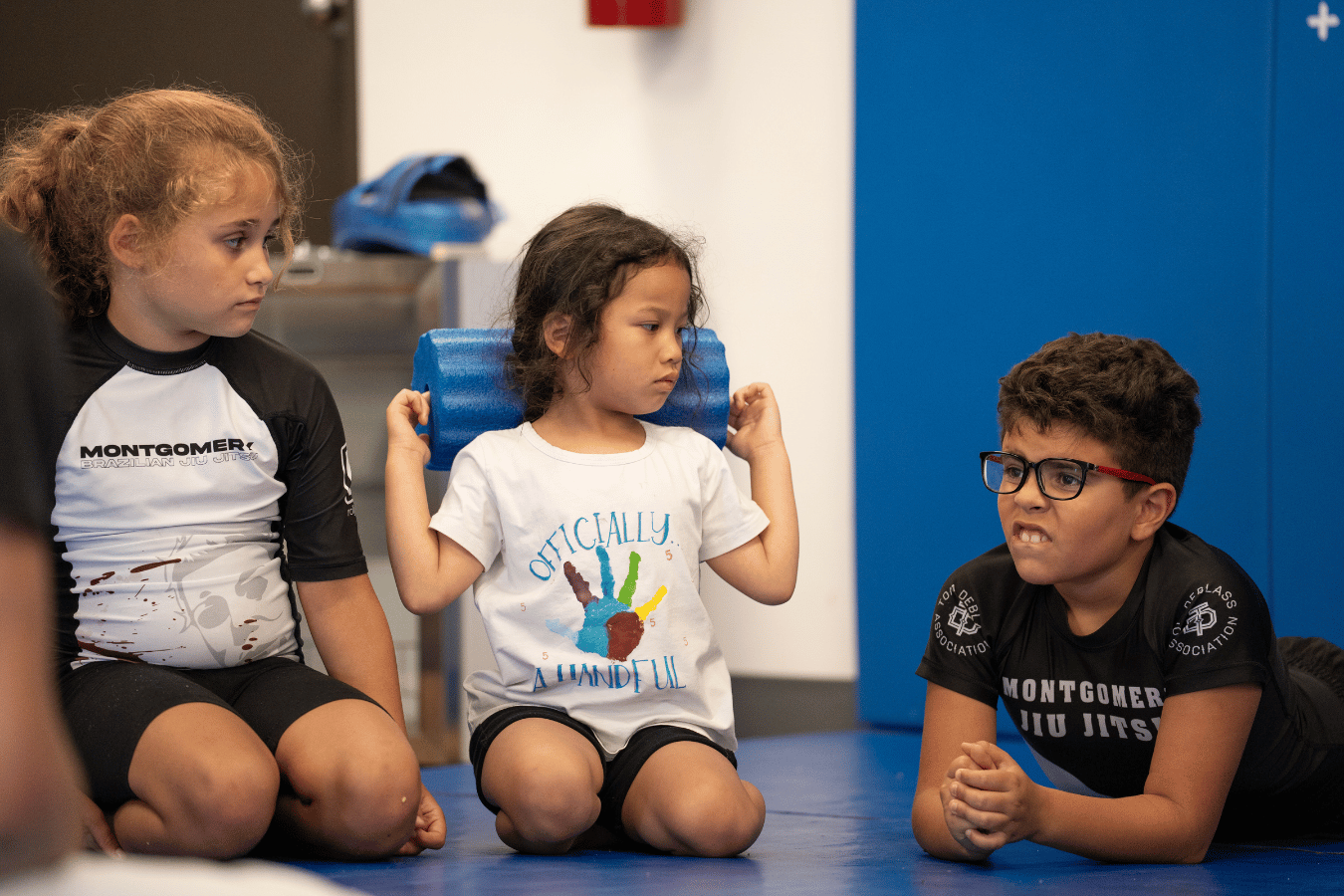
A great youth program does more than teach technique - it quietly reshapes how kids move, think, and recover from tough moments.
Youth Jiu-Jitsu works best when it becomes part of a child’s routine, not a once-in-a-while activity. In our Youth Jiu-Jitsu classes, kids move a lot, learn skills in small steps, and practice staying calm under pressure. Over time, those pieces add up to something parents really care about: healthier habits that stick.
Families in Montgomery often tell us they want an activity that checks more than one box: fitness, confidence, discipline, and a positive place to belong. That is exactly why Jiu-Jitsu in Montgomery, NJ has become such a strong year-round option. It is structured, skill-based, and engaging, especially for kids who do better when an activity feels both active and purposeful.
Below, we will break down how Youth Jiu-Jitsu in Montgomery, NJ supports long-term wellness: physical literacy, emotional regulation, social growth, and routines that follow kids home.
Why Youth Jiu-Jitsu builds habits instead of quick motivation
Motivation is unpredictable for adults, so expecting constant motivation from kids is a stretch. What we can build is consistency, and consistency is where lifelong habits come from. Youth Jiu-Jitsu creates a repeating rhythm: show up, warm up, learn, drill, practice, cool down, and leave a little better than you arrived.
Because Brazilian Jiu-Jitsu is a grappling art, kids develop skills through repetition and feedback, not through a single big moment. That learning style is powerful for habit-building. Your child gets used to practicing, being corrected, trying again, and improving in small, measurable steps.
Just as importantly, the class environment teaches kids to handle challenge without panicking. That matters for health because stress management is a real life skill. We see kids learn to breathe, reset, and re-engage when something feels hard, and that carries into school, friendships, and family life.
The fitness foundation: constant movement that supports stamina and coordination
A typical Youth Jiu-Jitsu class keeps kids moving, and not in a random way. Warm-ups raise the heart rate. Skill drills build coordination, balance, and core control. Live practice adds real effort and problem-solving in motion. That steady activity supports cardiovascular endurance and overall stamina, especially when a child trains consistently week to week.
What makes this kind of training different from casual play is that movement has a goal. Kids learn how to move their hips, how to base with their hands, how to shift weight, and how to stay stable while someone else is trying to off-balance them. That develops body awareness quickly, and body awareness is a building block for lifelong fitness.
Over months of training, we commonly see improvements in:
- Balance and posture during everyday movement
- Coordination between upper and lower body
- Core strength from bridging, shrimping, and controlled transitions
- Flexibility and mobility through safe, progressive ranges of motion
- Functional strength that comes from using the whole body together
This is one reason Youth Jiu-Jitsu in Montgomery, NJ appeals to families who want a sport that supports general athleticism, not just performance in one season.
Healthy routines that show up at home: sleep, screen time, and energy regulation
Parents usually notice the physical changes first: better stamina, a bit more confidence in movement, a stronger posture. Then something else happens, sometimes quietly. Kids start self-regulating better.
When children train hard in a structured setting, many fall into healthier patterns: they feel real physical tiredness (the good kind), they get hungry at normal times, and they sleep more deeply. Training also becomes a natural counterbalance to heavy screen time because it offers a real-world challenge, real people, and real feedback.
We never present Youth Jiu-Jitsu as a magic fix for everything, but we do see a familiar pattern. When training becomes part of a weekly schedule, it is easier for families to build routines around it: consistent bedtime, a pre-class snack, water intake, and a predictable after-school plan. Routine is not glamorous, but it is one of the strongest drivers of long-term health.
Confidence that is earned, not hyped
There is a difference between being told you are confident and becoming confident because you have done hard things. Youth Jiu-Jitsu teaches confidence through experience. Kids learn how to fall safely, how to escape a hold, how to keep trying when a technique does not work the first time.
That process matters for bullying resilience, too. We focus on composure, awareness, and boundary-setting. When kids feel physically capable, they often carry themselves differently. Shoulders back, eyes up, calmer voice. That alone can reduce the chance of being targeted, and it helps kids feel less intimidated in everyday interactions.
In class, confidence also becomes social. Kids learn to shake hands, listen, partner up, and be respectful even when competing hard in practice. When your child knows how to participate in a structured, respectful environment, that is a form of confidence that extends well beyond the mats.
Focus and self-control: why structure helps high-energy kids
A lot of parents searching for Youth Jiu-Jitsu ask us the same question in different ways: Will this help with focus? We cannot promise outcomes for every child, but we can explain why the structure of Jiu-Jitsu often supports attention and self-control.
First, the class has clear rules and predictable phases. Kids know when it is time to line up, when it is time to drill, and when it is time to practice live. That predictability reduces anxiety and helps kids stay oriented.
Second, Jiu-Jitsu demands decision-making under mild pressure. A child has to notice where hands are, where hips are, where space is. That kind of problem-solving is engaging. For many kids, especially those who have trouble sitting still, learning through movement can be the key.
Third, the training teaches pauses. Kids learn to stop when we say stop, to reset when a partner taps, and to wait their turn. Those moments build impulse control, and impulse control is a health habit in disguise. It affects how kids handle frustration, how they react when they lose, and how they respond to correction.
Social skills and belonging: learning to train with others
Youth Jiu-Jitsu is individual skill-building, but it is not a solo activity. Kids work with partners, rotate, and learn to cooperate with many personality types. That helps shy kids come out of their shell because social interaction has a purpose. You are not forcing small talk, you are practicing a drill together.
It also helps kids who are very intense. Training requires respect for partners and awareness of safety. Kids learn that strength is not the same as control, and control is the goal.
Over time, many students build:
- Better communication, especially in partner work
- More patience when learning something new
- Respectful competitiveness without trash talk or drama
- Accountability to teammates and coaches
- A sense of belonging in a positive, structured group
These are the kinds of social habits that make healthy communities, and we are proud to help build that here in Montgomery.
Safety in youth training: what we do to keep it controlled
Is Youth Jiu-Jitsu safe? It is a fair question, and you deserve a clear answer. Any sport with movement can involve bumps or bruises, but Youth Jiu-Jitsu can be a controlled way to build physical confidence when it is taught with safety-first coaching and age-appropriate expectations.
We keep training structured. We match partners thoughtfully, supervise closely, and teach kids how to tap and stop immediately. We emphasize technique over intensity, especially for beginners. We also teach kids how to be good training partners, which reduces accidents more than most people realize.
Safety is not just about preventing injury. It is also about emotional safety: kids should feel supported when they make mistakes, and they should feel proud when they improve. That is how a child sticks with an activity long enough for real healthy habits to form.
What a typical Youth Jiu-Jitsu class looks like
Parents often feel better once the class structure is clear. While exact content changes based on age and experience level, most sessions follow a consistent flow that supports learning and fitness.
1. Warm-up and movement skills that build coordination and raise heart rate
2. Technique lesson with a clear theme, taught step by step
3. Drilling with partners so kids practice safely and repeat correctly
4. Supervised live practice where kids learn timing and decision-making
5. Cool-down, recap, and a quick reminder of key behavior standards
That structure is a big reason Jiu-Jitsu in Montgomery, NJ works well for busy families. You know what your child is doing, you can track progress, and you can build a routine around the class schedule.
How often should kids train to build real habits?
Frequency depends on your child’s age, energy level, and your family schedule, but we generally find that consistency beats occasional intensity. For many families, two classes per week is a strong starting point. It is frequent enough to build momentum and skill retention, but not so frequent that it becomes stressful.
Some kids do great with one class weekly at first, especially if they are nervous or have a packed schedule. Others love coming three times per week once they settle in. The best plan is the one your family can sustain for months, because that is when Youth Jiu-Jitsu becomes a lifestyle habit instead of a short-term experiment.
First class checklist for Montgomery parents
If you are thinking about Youth Jiu-Jitsu in Montgomery, NJ, the first day does not need to feel complicated. A little preparation helps your child walk in calmer and more ready to participate.
• Comfortable athletic clothes if you do not have a uniform yet, plus a water bottle
• A small snack beforehand so energy stays steady through class
• Arrive a bit early to find parking, use the restroom, and meet our team
• Remind your child that mistakes are normal and questions are welcome
• Plan a relaxed post-class transition so your child can unwind and refuel
If your child is shy, it helps to frame the first class as learning the room and trying a few drills, not being perfect. That small mindset shift makes a big difference.
Ready to Begin
Building lifelong healthy habits takes more than good intentions. It takes a setting where movement is consistent, coaching is structured, and kids learn how to handle challenge with composure. That is what we aim to deliver every day on the mats, and it is why Youth Jiu-Jitsu can become one of the healthiest weekly anchors in your child’s life.
When you are ready, we would love to help your family get started at Montgomery Brazilian Jiu-Jitsu with a beginner-friendly plan that matches your child’s age, personality, and goals, whether that means building fitness, focus, confidence, or all three.
Train with purpose and make steady progress by joining a Jiu-Jitsu program at Montgomery Brazilian Jiu-Jitsu.