
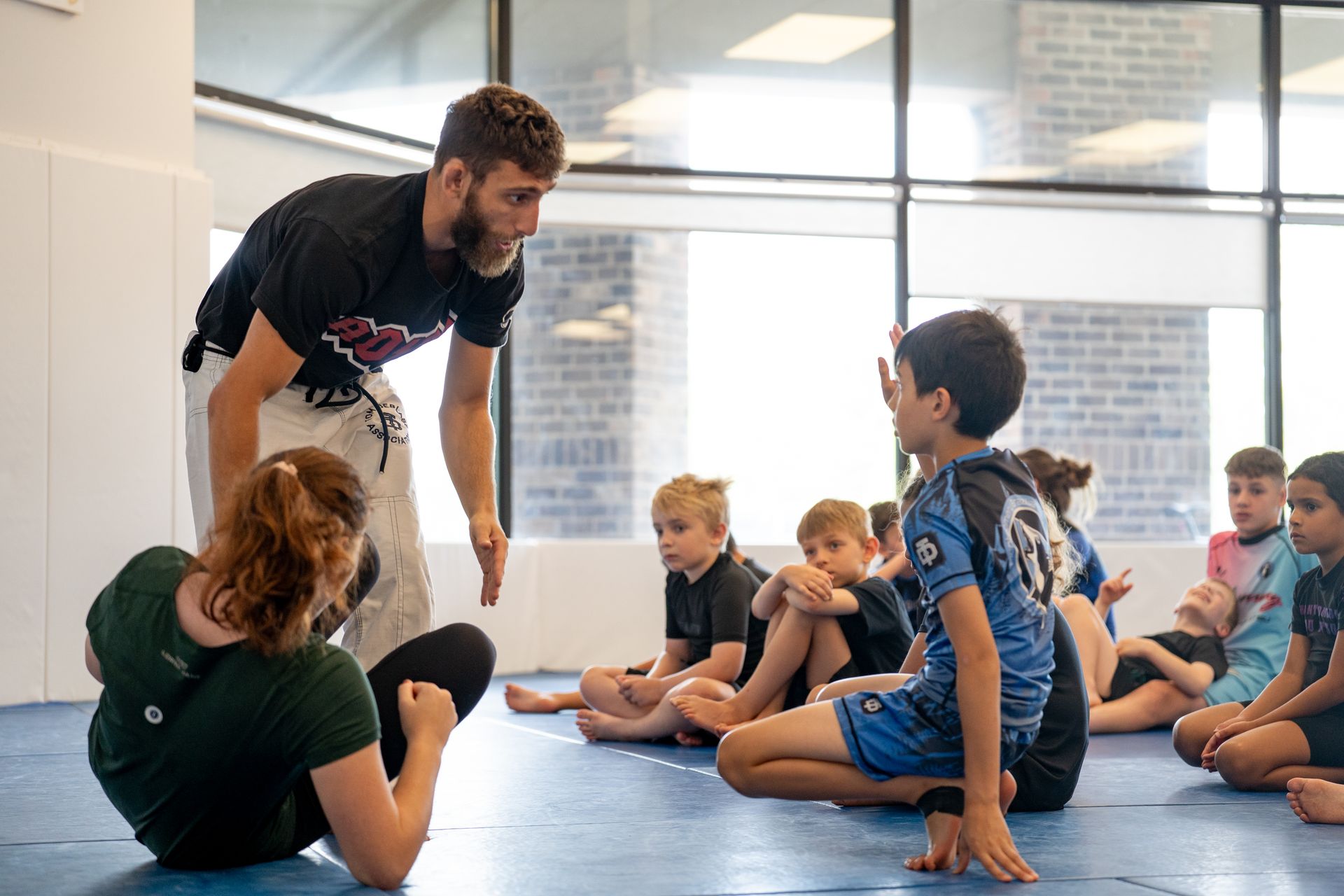
A first class should feel organized, welcoming, and safe, while still being active enough that your child leaves proud and a little sweaty.
Signing your child up for Youth Jiu-Jitsu can feel like a big step, even if you already know it’s a positive one. Most parents want the same things right away: a class that’s structured, instructors who pay attention, and an environment where beginners aren’t thrown into the deep end. That’s exactly what we build our youth program around, because the first day sets the tone for everything that comes after.
If you’re searching for Youth Jiu-Jitsu in Montgomery, NJ, you’re probably picturing a mix of fitness, confidence, and practical self-defense. You’re not wrong. But what matters most in the beginning is simpler: your child should understand what to do, where to stand, how to partner up, and how to stay safe. Our job is to make that clear from the moment you walk in.
And if you’ve heard that youth Brazilian Jiu-Jitsu is growing fast, it is. Major youth events in 2025 pulled in hundreds of competitors, and structured divisions and rankings make the sport feel more organized than ever. That’s exciting, but your child’s first class is not about chasing medals. It’s about building fundamentals in a way that feels fun, controlled, and doable.
Before You Arrive: What Parents Should Know
A smooth first day starts before you even step on the mat. When families check the class schedule page, most are looking for a time that fits school, homework, and dinner. We get it, Montgomery is busy, and consistency matters more than squeezing in a “perfect” time once.
If your child is nervous, that’s normal. Some kids walk in chatty and ready to wrestle. Others hang back and watch for a minute. We plan for both. We’ll guide your child through where to put shoes, where to line up, and how to follow the instructor’s cues without feeling singled out.
What to Wear (And What Not to Overthink)
For a first Youth Jiu-Jitsu class, simple is fine. Clean athletic clothes work if you don’t have a uniform yet, and we’ll help you understand what’s best long-term for the program.
A few practical tips that make the experience easier:
- Choose a t-shirt and athletic shorts or leggings without zippers, snaps, or pockets that could scratch
- Bring a water bottle your child can open independently
- Pack sandals or slides for walking off the mats (bare feet stay on the mat area)
- Tie long hair back and remove jewelry before class
- Make sure fingernails and toenails are trimmed, which is a small thing that really improves safety
Walkthrough: The Flow of a First Youth Jiu-Jitsu Class
Parents often ask what actually happens minute-by-minute. While each class can vary depending on age group and curriculum focus, the rhythm stays consistent so kids feel secure and know what to expect.
Here’s the general flow we use for Youth Jiu-Jitsu in Montgomery, NJ.
Check-In and Quick Orientation
When you arrive, we’ll help you check in and get settled. New students get a quick rundown: where to place shoes, where to wait, and what to do if your child needs a break. We also set expectations around listening, personal space, and how partnering works, because that’s where confidence starts.
Warm-Up: Movement Skills Disguised as Fun
Warm-ups in Youth Jiu-Jitsu aren’t random calisthenics. We use them to build the movement patterns that show up later in technique: shrimping, bridging, rolling safely, learning how to base with hands and feet, and getting comfortable moving on the ground.
It’s also where kids burn off that first wave of nervous energy. You’ll usually see shoulders relax about five minutes in.
Technique: One Skill, Taught in Clear Pieces
We teach technique in steps. Instead of dumping a complicated sequence on day one, we focus on a small set of fundamentals, like:
• How to fall and roll safely
• How to frame with your arms to create space
• How to stand up with balance instead of turning your back
• How to control position before trying anything flashy
Youth Brazilian Jiu-Jitsu is often described as problem-solving with your body. That’s accurate, but we keep it age-appropriate. Your child learns one detail, then another, then we let them try it with a partner at a controlled pace.
Partner Drilling: Supervised, Rotated, and Beginner-Friendly
This is the part many parents worry about, because “partner work” sounds intense. In our youth classes, partner drills are monitored closely. We match students by size, experience, and temperament as best we can, especially when a child is brand new.
If your child is unsure, we’ll pair them with someone calm and helpful. And if we see a pair moving too fast, we slow it down immediately. The goal is learning, not winning a practice rep.
Games With a Purpose (Yes, Really)
Many youth classes include games. That’s not filler. Games teach reactions, grips, balance, and decision-making under light pressure. The kids experience “live” movement without the stress of full sparring.
A well-designed game also teaches mat etiquette: stopping on a whistle, resetting quickly, and respecting partners. Those habits matter later when training gets more advanced.
Cooldown and Closing: What We Reinforce at the End
We finish class by regrouping, reviewing a key idea from the day, and reinforcing expectations like respect, listening, and personal responsibility. Kids leave knowing what they learned, even if they can’t name every move yet.
Will Your Child Spar on Day One?
Not necessarily, and when live training is introduced, we keep it controlled and appropriate to experience level. Some first classes involve no sparring at all. Other times, we may include a very limited form of positional practice where the goal is simply to hold a safe position or escape gently, with clear rules and close supervision.
One reason parents hear so much about sparring in Brazilian Jiu-Jitsu is that the sport has a strong competition scene. Youth events in 2025 have shown high finish rates, often around 50 to 60 percent at large tournaments, which tells you the sport is active and skill-focused. But that competition intensity is not what we drop on beginners. In our program, progress is layered. First you learn how to move safely. Then you learn how to control. Then, only when it makes sense, you add resistance.
Safety in Youth Jiu-Jitsu: What We Do and What You Can Expect
“Is Jiu-Jitsu safe for kids?” is one of the most common questions we get, and it deserves a real answer. Youth Jiu-Jitsu is a contact sport, so we never pretend it’s zero-risk. What we can do is manage risk with structure, supervision, and a culture that treats safety as part of the skill.
Our Core Safety Habits on the Mat
Safety is built into how we teach every class:
1. We teach tapping early and treat it as smart, not weak
2. We emphasize control before speed, especially for new students
3. We keep instruction age-appropriate and avoid unnecessary roughness
4. We monitor partner pairings and intervene quickly when needed
5. We reinforce hygiene rules to reduce skin issues and keep the room healthy
Hygiene and Gear Basics
Clean uniforms and clean bodies matter in grappling. We ask families to help with a few non-negotiables: wash training clothes after every class, keep nails trimmed, and don’t train with uncovered cuts or questionable rashes. It’s not glamorous, but it’s part of being a good teammate.
How Beginners Fit In (Even If Everyone Else Looks Experienced)
It’s common for a new family to watch a class and think, “Our child is going to be behind.” The reality is that youth classes always have a mix of experience levels because kids join at different times of year, school schedules change, and families try new activities at different ages.
We structure lessons so beginners can succeed inside the same class environment. That might mean simpler goals, more instructor check-ins, or giving a new student a specific focus like posture and hand placement while others add a follow-up detail. Your child doesn’t need prior martial arts experience to start Youth Jiu-Jitsu.
What Youth Jiu-Jitsu Builds Beyond the Mat
We love the athletic side of training, but most parents care about everyday carryover. Youth Jiu-Jitsu builds practical skills that show up in school hallways, on sports fields, and at home.
Here are a few changes families commonly notice as training becomes consistent:
- Better body awareness and coordination, especially in kids who feel “clumsy” in team sports
- Improved listening and follow-through because class has clear rules and immediate feedback
- More comfort with healthy struggle, meaning kids learn not to quit when something is hard
- Confidence that comes from skill, not from hype, because progress is measured in small wins
- Calmer responses in conflict, since kids practice control and problem-solving under pressure
That last point matters for bullying conversations. We don’t frame training as picking fights. We frame it as learning boundaries, practicing composure, and having options if someone puts hands on you.
Belts, Stripes, and Progress: How Advancement Works for Kids
Parents like to know how promotions work because it helps set expectations. In youth Brazilian Jiu-Jitsu, progress is a combination of attendance, attitude, fundamentals, and performance in training. We look for technical understanding, but we also care about behavior: how your child treats partners, how well your child listens, and whether your child can follow safety rules.
The good news is that kids don’t need to be “naturals” to advance. Steady effort counts. If your child shows up consistently, stays coachable, and keeps learning, promotions come as a reflection of real improvement.
Should Parents Stay and Watch?
You’re welcome to, especially in the beginning. Some kids do better when a parent is nearby. Others focus better when parents step back. You’ll know quickly which one you have.
If you stay, we recommend a simple approach: observe, let us coach, and save the play-by-play feedback for later. The mat can be a lot of sensory input, and kids benefit from one clear voice guiding them at a time.
How Our Youth and Adult Programs Fit Together for Families
Many Montgomery families love the idea of one training home where everyone can grow, and we’re set up for that. While your child trains Youth Jiu-Jitsu, you can also explore Adult Jiu-Jitsu in Montgomery, NJ on a schedule that fits your week.
Even if you never train yourself, it helps to understand what we teach and why we teach it. Parents who learn a bit about positions, basic safety concepts, and training culture usually feel more comfortable and more supportive at home, especially when a child starts practicing movement drills in the living room.
What Happens After the First Class?
After the first Youth Jiu-Jitsu class, most kids fall into one of two categories: your child can’t stop talking about it, or your child is quiet and processing. Both are normal. Jiu-Jitsu is new, physical, and mentally busy.
From our side, we’ll help you choose a sustainable training frequency. Consistency beats intensity. Two classes a week is often a sweet spot for beginners, but we’ll help you match it to your child’s energy, school load, and other activities.
We’ll also point you to the best next step on the website, whether that’s confirming the class schedule, understanding uniforms, or planning the next visit so the second class feels familiar instead of brand new.
Ready to Begin
If you want your child’s first experience with Youth Jiu-Jitsu to feel structured, beginner-friendly, and genuinely positive, we’ve designed every part of the process to support that from check-in to the final lineup. You’ll see clear coaching, supervised partner work, and a steady emphasis on safety and respect, because those are the foundations that make progress possible.
When you’re ready, Montgomery Brazilian Jiu-Jitsu is here to help your family get started with Youth Jiu-Jitsu in Montgomery, NJ in a way that feels comfortable and sustainable, whether your goal is confidence, fitness, anti-bullying skills, or a path into the wider sport.
No experience is necessary to join a Brazilian Jiu-Jitsu class at Montgomery Brazilian Jiu-Jitsu and learn step by step.