
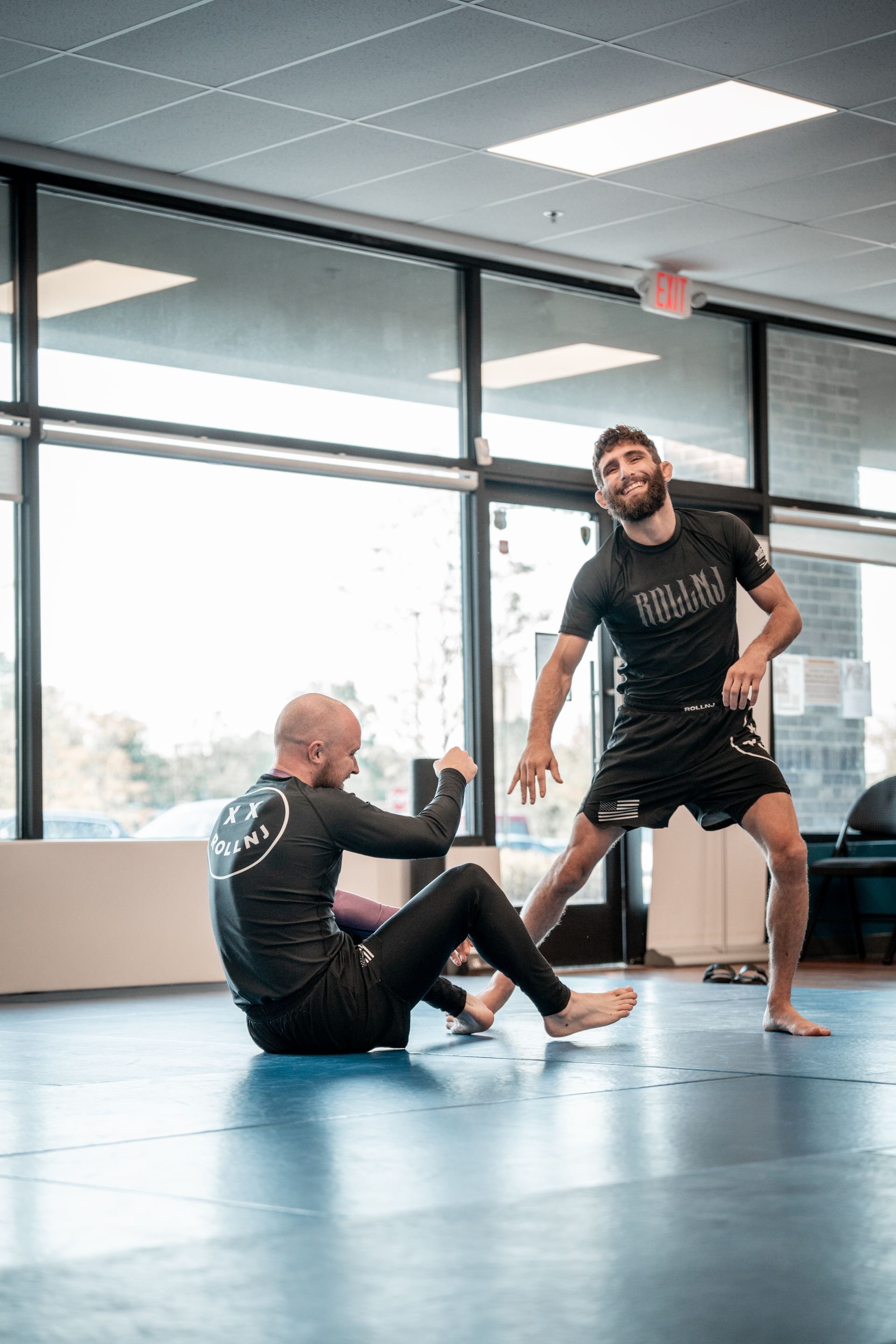
The fastest way to enjoy training is to drop the assumptions that make starting feel harder than it needs to be.
Starting Jiu-jitsu is exciting, but it can also feel oddly intimidating, mostly because of the stories people tell themselves before they ever step on the mat. We hear the same worries all the time from new students in Montgomery: concerns about fitness, age, injuries, or the idea that you have to be a certain type of person to belong in class.
Our job is to make your first weeks clear, safe, and genuinely doable. That starts with separating what Jiu-jitsu actually is from what movies, social media clips, and locker-room advice make it seem like. When you understand what beginner training really looks like, it becomes much easier to show up consistently and enjoy the process.
In this guide, we are going to break down the biggest beginner myths we see around Jiu-jitsu in Montgomery, NJ, explain what is true instead, and give you practical ways to start with confidence.
Why myths stick around in Jiu-jitsu
Jiu-jitsu is hands-on, close-range, and technical, so it attracts strong opinions. Many of those opinions come from watching advanced sparring, not beginner classes. If your only exposure is a highlight reel of fast takedowns and intense submissions, it is easy to assume day one looks like that. It does not.
Another reason myths spread is that beginners compare themselves to the most experienced people in the room. That comparison is unfair, and it can make you think you are behind before you begin. In reality, our classes are designed to meet you where you are, then build skills step by step.
Finally, people tend to simplify complex skills into catchy phrases like “size does not matter” or “just roll more.” Those lines contain a little truth, but without context, they create bad expectations and frustrate new students.
Myth 1: You need to be in great shape before you start
This is the most common barrier we hear, especially from adults who have not trained in a while. The truth is that Jiu-jitsu is one of the best ways to get in shape because it gives you a reason to move consistently and progressively. You do not need “Jiu-jitsu fitness” to begin, because you build it by showing up.
Our beginner training is structured, coached, and paced. You will drill techniques, learn positions, and work with training partners who understand you are learning. Some days you will leave tired, sure, but the goal is steady progress, not survival.
If your current fitness level is not where you want it to be, that is not a reason to wait. It is a reason to start with a plan and let training do its job.
Myth 2: You have to be young to learn effectively
A lot of adults assume Jiu-jitsu is a young person’s game. We understand why: the sport can look fast and explosive. But the art itself rewards timing, leverage, positioning, and decision-making. Those are skills adults can develop very well, and often with more patience than a teenager has.
In adult training, we focus on smart movement and good habits. You learn how to protect your joints, how to breathe under pressure, and how to choose techniques that fit your body type and mobility. That approach is exactly what makes adult Jiu-jitsu in Montgomery, NJ sustainable over years, not just months.
Age changes recovery, not possibility. When you train with intention and communicate, you can progress safely at almost any starting point.
Myth 3: You will get injured right away
Any contact sport has risk, and we take that seriously. The myth is that injuries are inevitable, especially for beginners. In reality, most preventable injuries come from chaos: people moving too fast, ignoring taps, or trying to “win” a drill. Our culture emphasizes control, communication, and learning.
Beginners spend a lot of time drilling fundamental movements and positions. When sparring is introduced, it is structured and supervised, and you are never expected to go full intensity. Tapping is normal, encouraged, and respected. If you are new, your job is to learn the language of the positions and keep yourself safe, not to prove toughness.
We also help you understand the practical habits that reduce risk: warming up properly, pacing yourself, and choosing training partners you feel comfortable with.
Myth 4: You have to be naturally flexible
Flexibility helps, but it is not a prerequisite. Many effective Jiu-jitsu styles rely more on posture, frames, and angles than on deep ranges of motion. If you are not flexible, we adjust how you perform techniques so you can execute them safely and efficiently.
The bigger truth is that mobility improves when you train consistently. You will learn how to move your hips, how to rotate through positions, and how to maintain alignment. Over time, your body adapts. You might not turn into a yoga person, but you will almost certainly feel less stiff in everyday life.
If you are dealing with tight hips, shoulders, or ankles, tell us. We can guide you toward versions of techniques that make sense for your body right now.
Myth 5: Strength does not matter at all
You have probably heard “Jiu-jitsu is for the smaller person,” and there is truth in the idea that technique can overcome size. But the myth is that strength is irrelevant. Strength matters, just like grip, cardio, balance, and coordination matter. The difference is that Jiu-jitsu teaches you to use your attributes efficiently instead of relying on them blindly.
What we want for you is a skill set that works whether you are tired, whether you are facing someone bigger, or whether you cannot muscle through a mistake. Technique becomes the base. Strength becomes a bonus, not the whole plan.
This is also why beginners improve quickly when they stop trying to “go hard” and start trying to “go correct.” You will feel the difference in your first month.
Myth 6: You need to know how to fight to join
You do not. In fact, many people start because they do not feel confident in their ability to handle physical pressure. Jiu-jitsu gives you a controlled way to learn: how to stand, how to fall safely, how to escape pins, and how to stay calm when someone is close.
A beginner-friendly environment matters here. We teach the basics without assuming you already know the terms or the culture. You will learn what tapping means, how rounds work, and how to be a good training partner, even on day one.
If you are worried about being awkward, that is normal. Everyone is awkward at first. The mat is one of the few places where that is completely expected.
Myth 7: Sparring is just fighting, so it is always intense
Sparring, or rolling, is practice. Good practice has structure. In beginner phases, we can use positional rounds where you start in a specific scenario, like escaping side control, and focus on one objective. That keeps things productive and lowers the “randomness” that makes new students feel overwhelmed.
Intensity is also something you can control. You can roll light and technical. You can set boundaries. You can say, “Can we go easy?” and that should be respected. Learning to communicate is part of training.
Over time, you will develop awareness: when to push, when to slow down, and how to train safely even when the pace rises.
Myth 8: You have to memorize lots of moves to get good
Beginners often think Jiu-jitsu is a huge list of techniques, and it can feel that way at first. But progress comes more from understanding positions and principles than from collecting moves. When you understand how to maintain posture, control hips, and create angles, techniques start to connect naturally.
We teach in layers: you learn a position, then a simple goal, then a reliable way to achieve that goal. You repeat it enough that your body starts to recognize the pattern. That is when Jiu-jitsu gets fun, because you stop thinking about every detail and start feeling what is happening.
If you ever feel lost, that is not failure. It is information. It means we narrow the focus and build one piece at a time.
Myth 9: You must train every day or it is pointless
Consistency matters, but “every day” is not the only path. Many adults have work deadlines, family schedules, and unpredictable weeks. The myth is that if you cannot train constantly, you should not start. We disagree. A realistic schedule that you can maintain beats an intense schedule that burns you out.
A practical approach looks like two to three sessions per week, especially at the start. That gives your body time to recover and your mind time to absorb what you learned. You also get the benefit of showing up fresh enough to focus, which is where real skill development happens.
If you want to do more later, great. If your life only allows a couple sessions weekly, we can still help you progress.
What beginner training should feel like (and what it should not)
You do not need to guess whether your experience is normal. Beginner Jiu-jitsu should feel challenging, but it should also feel structured and supportive. Here are a few signs you are on the right track:
• You leave class with one or two specific concepts you can remember, not ten random techniques you cannot use
• Your training partners help you reset and try again instead of trying to dominate every exchange
• You can ask questions without feeling like you are interrupting the flow
• You feel physically worked, but not wrecked to the point you dread returning
• You notice small improvements, like calmer breathing or better balance, even before you “win” anything
If your experience matches that, you are building a foundation that lasts. That is the goal.
How to stop believing the myths and start making progress
Information helps, but action is what changes your comfort level. If you are ready to begin Jiu-jitsu in Montgomery, NJ, we recommend a simple progression that keeps you safe and moving forward.
1. Show up with a beginner mindset and focus on learning positions, not winning exchanges
2. Communicate early about injuries, past surgeries, or limits so we can guide you responsibly
3. Pick a sustainable weekly schedule and protect it like any other appointment
4. Track small wins like smoother escapes, better posture, or remembering one key detail
5. Stay patient through the early “confusing” stage because it passes faster than you think
This is the same approach we use to help beginners turn uncertainty into confidence, one class at a time.
Take the Next Step
The myths around Jiu-jitsu usually come from seeing the end of the journey without understanding the beginning. When you start the right way, training becomes less intimidating and much more rewarding. You do not need to be tough, flexible, or fearless, you just need a clear path and a room where you can learn without ego getting in the way.
That is what we focus on every day at Montgomery Brazilian Jiu-Jitsu: building real skill through progressive coaching, respectful partners, and a training environment where beginners can settle in and improve fast without feeling rushed.
If you’re curious about Jiu-Jitsu training, join a class at Montgomery Brazilian Jiu-Jitsu and learn from the ground up.