
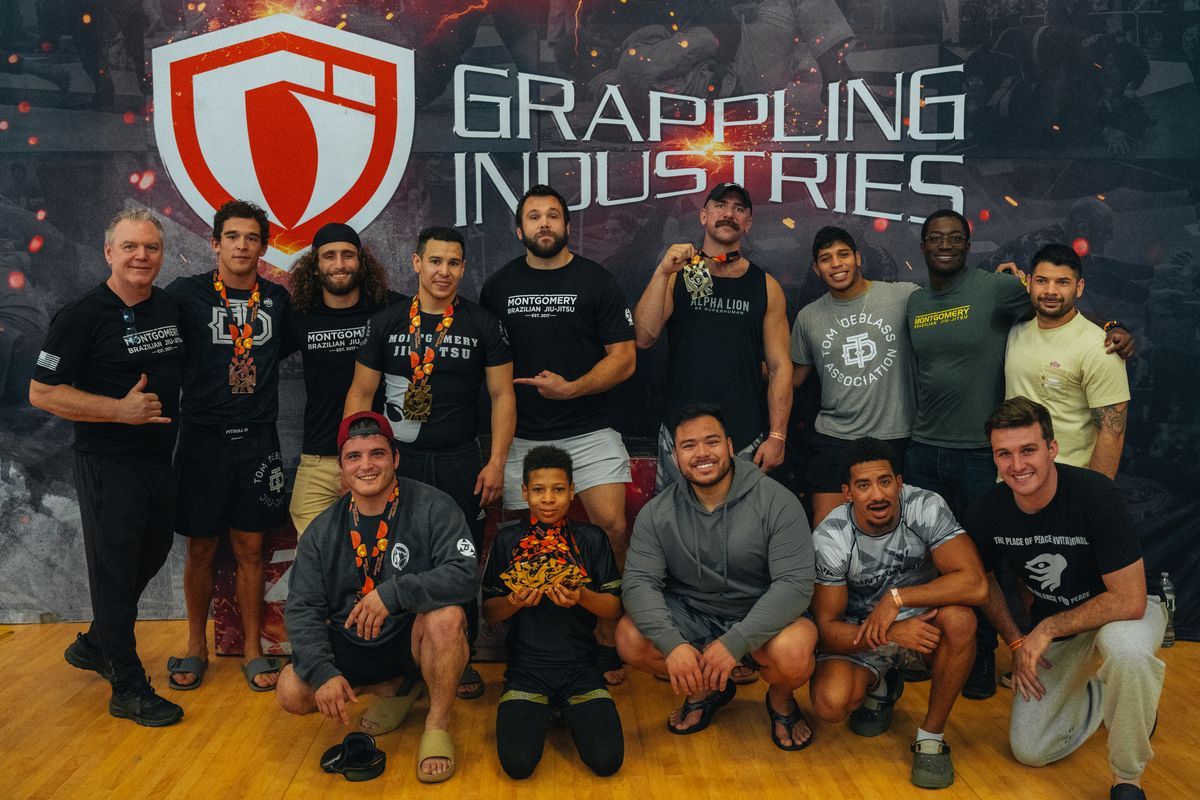
In Montgomery, NJ, jiu-jitsu has a way of turning training partners into the kind of people you actually want to see outside the gym.
If you have ever searched for Jiu-jitsu in Montgomery, NJ, you probably started with a practical goal: get in shape, learn real self-defense, find a hobby you can stick with, or just do something that feels more alive than another treadmill session. Those are good reasons. But what surprises most new students is what keeps you coming back when motivation fades a little: the people.
We see it all the time in our adult classes. You show up for the technique, you stay because someone learns your name, helps you tie your belt, and makes sure you do not feel lost. Jiu-jitsu is a close-contact sport, so trust is not optional. Over time, that trust becomes camaraderie, and camaraderie becomes community.
In New Jersey, the larger tournament scene makes this visible. Events can draw hundreds of competitors and award hundreds of medals, and the top teams often place well because they move like a unit, not because every individual is a superhero. You do not need to compete to feel that same team spirit, though. The training room is where it starts, and where it lasts.
Why Jiu-jitsu Creates Real Connection (Not Just Small Talk)
Most adult social spaces are built around conversation first. Jiu-jitsu flips that. You move first, solve problems together, and talk naturally afterward. The bond forms through shared effort, not forced networking.
There is also a unique honesty to the training. When you roll, the mat gives you immediate feedback. You cannot fake balance, timing, or composure under pressure. That vulnerability actually makes it easier to connect, because everyone is working through something, and everyone knows it.
Over weeks and months, we watch that shift happen. New students start by quietly picking a spot on the edge of the room. Then one day, we notice our newer members chatting after class, comparing notes on grips, laughing about a scramble, or asking if anyone wants to hit an open mat session. It is not dramatic. It is steady. And it feels real.
The Trust Factor: Sparring Builds Friendship Faster Than You Expect
Rolling is controlled sparring, but it is still intense in a way most workouts are not. You are close, you are moving, and you are learning to stay calm while someone is actively trying to improve position. That only works when training partners protect each other.
In our room, trust shows up in small choices:
- You apply submissions with control, not ego
- You give your partner time to tap and you release immediately
- You adjust intensity so both people can learn
- You communicate if something feels off, like a sore shoulder or a tight neck
Those habits create safety, and safety creates consistency. Consistency is where friendships grow, because you start to see the same faces on the same nights, working through the same challenges. In adult Jiu-jitsu in Montgomery, NJ, that rhythm matters. Most of us are balancing jobs, family schedules, and daily stress. Training becomes a reliable anchor, and your teammates become part of that stability.
Team Spirit Without the Pressure to Compete
New Jersey has a vibrant competitive scene, and big events show just how much team results matter. Hundreds of divisions, hundreds of medals, and team point totals that reward consistency across skill levels, ages, and weight classes. That is the important part: team success is rarely just the “top guy.” It is everyone showing up.
We bring that same mindset into regular training. You do not need a tournament bracket to build team spirit. You build it when:
- A higher belt helps you troubleshoot a position after class
- A training partner stays an extra round because you want more reps
- Someone notices you have been gone and checks in
- The room celebrates small milestones, like your first clean guard pass
For adults, especially, a supportive team environment is often the difference between trying Jiu-jitsu once and practicing it for years. A team culture makes hard days easier and good days even better.
What Friendships Look Like in an Adult Program
Adult friendships can be oddly hard to make. You might work with people you like, but everyone is busy. You might have neighbors you wave to, but it stays surface-level. Training changes that because you are spending consistent time together while doing something challenging.
In our adult program, friendships usually form in phases. It is not a rule, just a pattern we recognize.
1. Familiarity
You start recognizing names, schedules, and a few go-to partners who match your pace.
2. Shared problem-solving
You begin comparing what is working, asking questions, and helping each other remember details from class.
3. Trust under pressure
You roll more, you get comfortable tapping, and you realize your partners are invested in your progress, not just winning rounds.
4. Off-mat connection
People start chatting before class, grabbing coffee nearby, or messaging about open mat times and upcoming events.
5. Long-term support
Training partners become the ones who notice your progress, keep you accountable, and celebrate your wins, on and off the mat.
This is one reason Jiu-jitsu in Montgomery, NJ fits adult life well. The structure is built in. You do not have to manufacture community. You show up and train, and it grows naturally.
The Mat Room Culture That Makes Friendships Stick
A room can teach the same technique and still feel totally different depending on culture. We put a lot of intention into how our classes run, because culture is what determines whether someone feels welcome and safe enough to keep coming back.
We focus on a few simple things that make a big difference:
- Clear coaching, so beginners do not feel behind from day one
- Partner rotations that help you meet people without awkwardness
- Practical pacing, so you can train hard without feeling wrecked for work tomorrow
- Respectful rolling, where control matters more than proving a point
- Consistent etiquette, so everyone knows what to expect
When those pieces are in place, people relax. And when people relax, they connect. It is a little funny, actually, how quickly a room full of adults can feel like a team once everyone is sweating and trying to remember the same three-step sequence.
Beginner-Friendly Training: How We Help You Feel Part of the Team
Walking into a martial arts class for the first time can feel intimidating. The vocabulary is new, the movements are unfamiliar, and it is easy to worry you will slow everyone down. Our job is to make sure that does not happen.
We keep beginners moving with fundamentals that matter immediately: posture, base, frames, escapes, and basic positional control. Those skills give you quick wins, and quick wins make training fun. More importantly, fundamentals give you a safe way to participate in live rounds without panic.
If you are brand new to Jiu-jitsu, here is what we recommend for your first few weeks:
- Show up consistently, even if it is just two days per week
- Ask questions in the moment, because small clarifications prevent bad habits
- Choose controlled partners while you learn pace and positioning
- Tap early and often, because tapping is how you train tomorrow
- Focus on survival and escapes first, because confidence starts there
This approach keeps your progress steady. It also helps friendships form faster, because you are not stuck in your head the whole time. You can actually enjoy the room and the people in it.
Lifelong Practice: Why Jiu-jitsu Ages Well With You
A big reason friendships last in this sport is that people can train for decades. Jiu-jitsu rewards technique, timing, and decision-making, not just athleticism. That matters in adult life, where energy levels and recovery can change from season to season.
We also see how the mindset carries over. You learn to stay calm, solve problems under pressure, and keep showing up even when you are not at your best. Those traits build respect between training partners. Respect is the glue of long-term team culture.
And because New Jersey continues to grow as a Jiu-jitsu hotspot, there is a steady stream of adults getting started. That creates a healthy mix of experience levels on the mat. When newer students and more experienced students train together, the room stays dynamic, and community stays strong.
Building Team Spirit in Montgomery, NJ, One Class at a Time
Team spirit is not a slogan. It is something you can feel when you walk into class: people greeting each other, partners matching intensity, everyone taking the warm-up seriously, and the room staying focused even when it gets tough.
In Montgomery, NJ, we also understand the local reality. Many adults are commuting, managing family responsibilities, and squeezing training into busy evenings. So we build our class experience to be worth your time. You should leave feeling challenged, but also supported. You should feel like you got better, and like you belong here.
That is what turns “a place you train” into “your team.”
Take the Next Step
If you want Jiu-jitsu to be more than a workout, the environment matters as much as the technique. The right training culture makes it easier to stay consistent, improve safely, and build friendships that last long after the first month of motivation.
That is exactly what we aim to create every day at Montgomery Brazilian Jiu-Jitsu: a welcoming room where adults can train seriously, laugh a little, and build real team spirit in Montgomery without needing to chase a competition identity to feel like part of something.
See firsthand what makes training at Montgomery Brazilian Jiu-Jitsu special by joining a Jiu-Jitsu class today.