
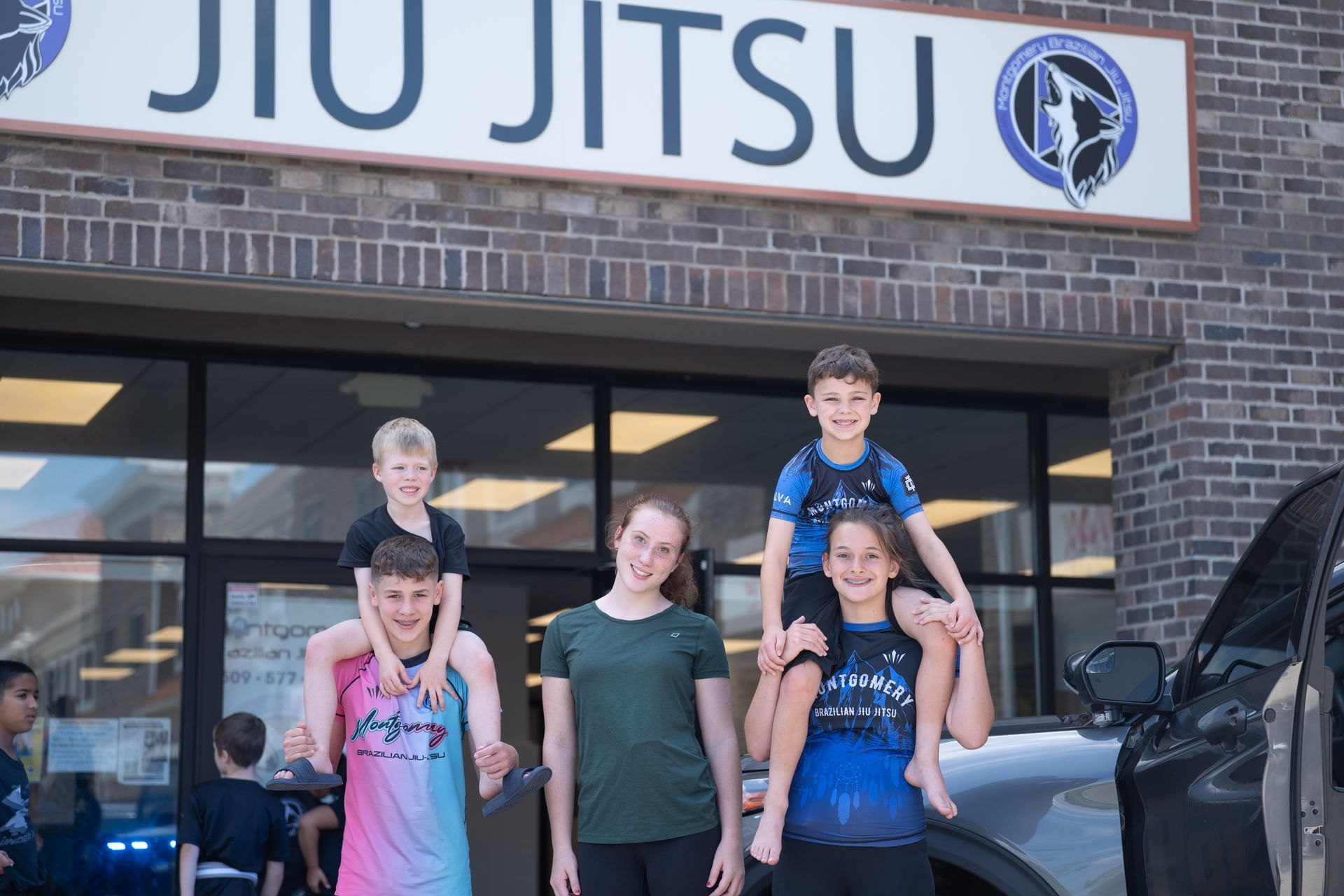
Youth Jiu-Jitsu is where kids learn to stay calm, think fast, and build real confidence one small win at a time.
If you are looking for an after-school activity that keeps your child moving while also building focus and confidence, Youth Jiu-Jitsu is worth a serious look. In Montgomery, NJ, many families want something structured, close to home, and useful beyond a single season. We get that, and we build our kids’ program around those real-life priorities.
What surprises most parents is how creative jiu-jitsu feels once kids get into it. This is not a memorize-and-repeat activity where everyone does the same thing forever. It is guided problem-solving with a partner. Over time, that mix of movement, choices, and coaching can help kids develop self-control, resilience, and social skills that show up at school and at home, too.
Why Youth Jiu-Jitsu works so well for Montgomery families
Montgomery is a family-centered community, and that usually means busy calendars. Parents want an activity that is reliable, indoor, and consistent year-round. Youth Jiu-Jitsu checks those boxes, but the bigger reason it fits local families is the way it develops the whole child, not just athletic ability.
Research and practitioner summaries around youth Brazilian Jiu-Jitsu commonly point to improvements in confidence, coordination, balance, self-control, social skills, and executive functioning. We see those patterns play out in real training: kids learn to listen, follow steps, and adjust when something does not go their way. That is a life skill, not just a sports skill.
When you search for Youth Jiu-Jitsu in Montgomery, NJ, you are probably comparing it in your head to soccer, baseball, gymnastics, or dance. Those are great activities, but grappling offers something uniquely practical: it teaches body awareness, safe contact, and calm decision-making under pressure. For many kids, that is exactly what they need.
Creativity on the mats: the confidence parents actually notice
A common myth is that martial arts is mostly about discipline and obedience. Discipline matters, yes, but in our kids’ classes, we also coach creativity in a very specific way: we give your child a problem, a safe environment, and a few tools, and then we let your child solve it.
Brazilian Jiu-Jitsu is often described as a “human chess” style of sport, and that translates well for kids. A position changes, a grip breaks, a balance shifts, and your child learns to adapt. That process builds confidence because it is earned. When a child figures out a small solution with coaching, the belief becomes “I can handle hard things,” not “I hope I get lucky.”
This is a big reason Youth Jiu-Jitsu can be a strong fit for shy kids, too. Not every child wants the spotlight. On the mats, confidence grows quietly through reps, partner work, and small personal milestones. Kids do not have to be loud to be successful.
Physical benefits that show up quickly
Parents often ask what kind of fitness benefits they should expect. Youth Jiu-Jitsu is full-body movement: pushing, pulling, bracing, rolling, and balancing. Review-style summaries in the youth BJJ space note that children can improve core strength, balance, coordination, and cardiovascular health within months of consistent training. That lines up with what we see when kids attend regularly.
The difference is that kids usually do not experience it as “working out.” They experience it as games, drills, and challenges. They are sweating and getting stronger, but they are also laughing and learning.
We also like that this is an indoor, year-round activity. Montgomery weather is not always friendly to outdoor practice. When the seasons change, our mats stay the same.
Social skills and classroom carryover: what happens off the mat
Families often come to us for confidence, but stay because of the changes they notice at home and school. Youth martial arts programs are frequently associated with improved self-regulation, resilience, and classroom behavior, especially when the coaching style is structured and age-appropriate.
Here is how that carryover happens in everyday training:
• Kids practice listening to multi-step directions, then doing the steps in order
• Kids learn to pause before reacting, because reacting instantly often makes positions worse
• Kids practice respectful partner behavior, including boundaries and communication
• Kids learn to recover after mistakes, because mistakes are part of every round
• Kids get used to consistent routines, which strengthens follow-through
It is not magic, and it is not overnight. But the steady rhythm of training gives kids a place to practice focus and emotional control in a real setting, not just in a lecture.
Safety first: what parents should know about kids’ jiu-jitsu
“Is jiu-jitsu safe for kids?” is one of the most important questions you can ask, and we take it seriously. Youth-focused safety content often points out that BJJ can be lower-impact than many team contact sports when instruction is age-appropriate and safety-led. The key is how the class is run.
Our youth classes are built around supervision, structure, and clear rules. We coach kids to protect training partners, not “win at all costs.” We also teach tapping early, and we reinforce it often. Tapping is a skill: it is how kids learn to communicate, respect limits, and stay safe.
We also keep training age-appropriate. Kids are not just small adults, so our coaching uses controlled drilling, positional games, and carefully managed partner work. If your child is brand new, we meet your child where your child is.
What makes Youth Jiu-Jitsu different from adult classes
Youth Jiu-Jitsu is not an adult class with smaller uniforms. The goals are different, and the teaching style is different. In kids’ training, we care about skill-building, movement quality, confidence, and character habits that stick.
In practical terms, that means more coaching cues, more structured rounds, and more repetition. We use short explanations, clear demonstrations, and frequent resets so kids stay on track without feeling overwhelmed. We also build in positive partner behavior and mat etiquette from day one.
As kids mature, we gradually add complexity. That progression helps kids feel challenged without feeling buried, which is important for motivation.
What to expect in your first class
Trying something new can be a little intimidating for kids and for parents. We work hard to make the first day feel welcoming and clear. You will see a structured class, consistent coaching, and a supportive training environment where kids are learning, moving, and figuring things out together.
A typical first class usually includes warm-ups that look like movement games, basic technique instruction, and partner drills. Depending on age and experience, kids may do light positional sparring in a controlled format. We keep the goal simple: learn safely, participate fully, and leave feeling proud of the effort.
If you are wondering what to bring, start with the basics. Comfort matters, and so does cleanliness.
What your child should wear and bring
For the first day, you do not need to overthink it. If your child does not have a uniform yet, you can start with athletic clothes that allow movement. We will guide you on uniform details as you continue and help you understand what is required for regular training.
Here is what generally helps kids feel prepared:
• A clean t-shirt or rashguard and athletic shorts or leggings with no zippers
• A water bottle that is easy to open quickly between rounds
• Flip-flops or slides for walking off the mats, since bare feet stay on the training surface
• Long hair tied back securely, so it stays out of the face during drills
• A light snack for after class if your child tends to get hungry post-training
We also recommend trimming fingernails and toenails, and having kids wash hands before class. Those small habits support everyone’s safety and comfort.
How often should kids train each week?
Consistency beats intensity, especially for kids. For many families, two classes per week is a strong starting point for building familiarity and confidence. Once a child feels comfortable, adding a third day can accelerate progress and help the habits “stick.”
The best schedule is the one your family can actually keep. If your child trains once a week, that is still valuable. If your child trains three times a week, that can be a great rhythm. We can help you choose a plan that fits your routines and energy levels, and the class schedule page makes it easy to see what times work.
Girls in jiu-jitsu: strong, capable, and completely welcome
Girls absolutely do Youth Jiu-Jitsu, and it can be an excellent fit. The art is based on leverage, positioning, balance, and timing, not brute force. That means girls can build real skill quickly, and that skill feels empowering in a very grounded way.
We also find that many girls enjoy the problem-solving side of grappling. Progress becomes tangible: better movement, better balance, better control, and a clearer sense of “I can handle myself.” That matters for confidence, and it matters for anti-bullying readiness, too.
Bullying and conflict: what jiu-jitsu actually teaches
Parents often ask if Youth Jiu-Jitsu helps with bullying. We think of it in layers. First, jiu-jitsu builds posture, awareness, and confidence. Kids who carry themselves differently often get treated differently, which is a quiet but real benefit.
Second, jiu-jitsu teaches boundaries. Kids learn appropriate physical contact in a supervised setting, and they learn to say “stop” through tapping and communication. Third, kids learn practical control skills that can help them stay safer if a situation turns physical, while emphasizing that training is about safety and responsibility.
Most importantly, the emotional piece matters. Kids learn to breathe, reset, and problem-solve instead of panicking. That calmness can change how a child experiences conflict in the first place.
Youth Jiu-Jitsu in Montgomery, NJ is also a parent education process
One trend in youth martial arts content is the growing emphasis on parent trust. Families want to understand safety, class structure, hygiene expectations, and how progress is measured. We agree with that. When parents understand what is happening on the mats, kids feel more supported.
We encourage you to ask questions about how classes are grouped, how partnering works, and what your child is practicing at each stage. We also recommend checking the program details and class schedule on the website so expectations are clear before you arrive. Clarity reduces anxiety, and kids pick up on that.
Youth Jiu-Jitsu in Montgomery, NJ should feel like a positive, structured part of your week, not another confusing commitment. Our job is to make the learning process straightforward.
Take the Next Step
If you want your child to build confidence through real problem-solving, Youth Jiu-Jitsu offers a rare mix of physical training and mental growth. We designed our kids’ program to be structured, safety-focused, and genuinely fun, with coaching that helps kids become more capable over time, not just busier.
When you are ready, we would love to welcome your family at Montgomery Brazilian Jiu-Jitsu. You can explore our schedule, get clear on what to bring, and start with a first class that feels supportive and well-coached, right here in Montgomery.
Ready to train? Join a Brazilian Jiu-Jitsu class at Montgomery Brazilian Jiu-Jitsu today.